
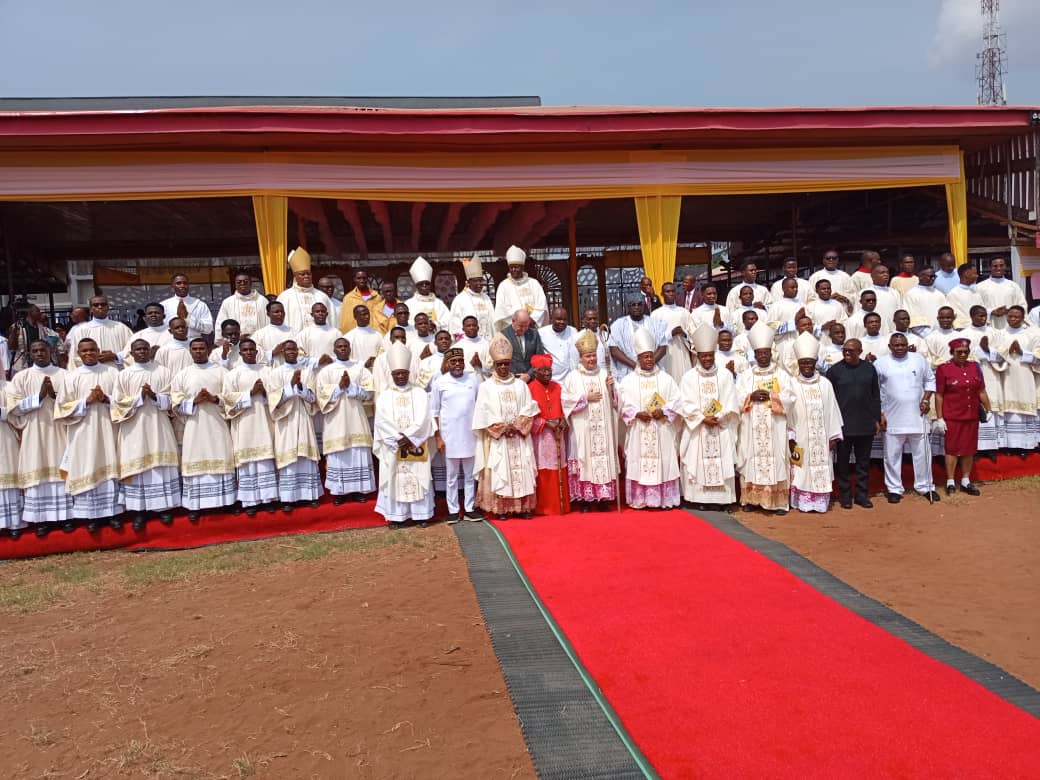
The Pope’s envoy to Nigeria, Archbishop Michael Francis Crotty, has paid glowing tribute to the early Catholic missionaries who arrived in Igbo land 140 years ago, saying their work was driven by a singular motivation: to take salvation “to the ends of the earth” and restore human dignity through education and the teachings of Christ.
Presiding over a thanksgiving Mass at the Basilica of the Most Holy Trinity, Onitsha, Archbishop Crotty—an Irish cleric of the same nationality as Bishop Joseph Ignatius Shanahan—delivered an incisive homily that traced the origins and profound impact of the Catholic mission in Southern Nigeria. He noted that the first missionaries, including Rev Fr Joseph Lutz, Bishop Shanahan, Rev Fr Leon Legeune, and Archbishop Charles Heerey, placed education at the centre of their evangelical work to “realise the human potentials” of the communities they encountered.
“The great achievements seen today across Southern Nigeria would not have been possible were it not for the arrival of Fr Joseph Lutz and his companions in 1885,” Archbishop Crotty said. He added that the missionaries’ work extended beyond preaching; they established schools and training centres, laying the foundations for a generation equipped to contribute meaningfully to society. “Their vision was holistic—they sought to build not just faith, but dignity, intellect, and social progress,” he explained.
The Apostolic Nuncio extended his “warmest congratulations” to the Metropolitan Archbishop of Onitsha, Most Rev Valerian Okeke, for successfully organising the anniversary, praising the “impressive fruits of evangelisation” visible in the large gathering of priests, consecrated religious, and lay faithful. Archbishop Crotty highlighted that such gatherings are testimony to the enduring relevance and vitality of the Church in the region, whose roots trace back to the sacrifices of a few dedicated men over a century ago.
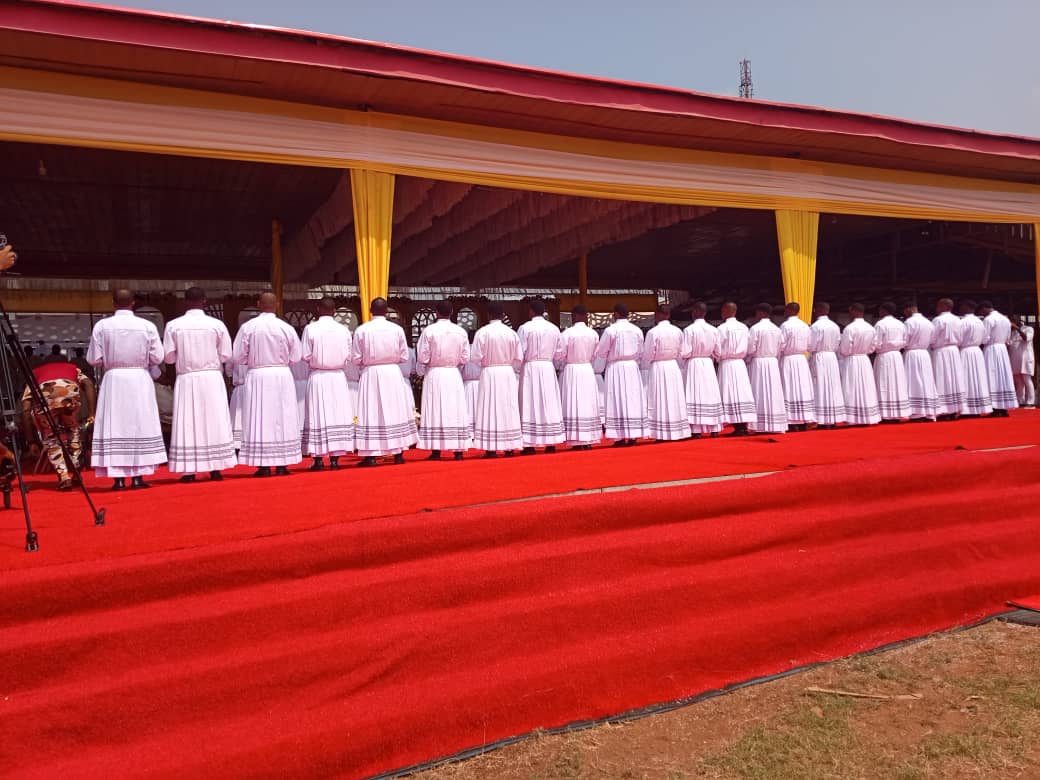
Adding to the significance of the celebration, Archbishop Crotty ordained 44 new deacons, marking a milestone in the ecclesiastical life of the Archdiocese. Addressing the newly ordained, he assured them that “the Lord will complete what He has already begun in you,” while urging them to embrace obedience, chastity, humility, and a life of service. He called on them to “believe what you read, teach what you believe, and practise what you preach,” reminding them of their sacred responsibility as ministers of Christ.
In his remarks, Archbishop Okeke expressed deep gratitude for the presence of the Apostolic Nuncio and other dignitaries. He described the anniversary as both a privilege and a spiritual milestone, honouring the “heroic early missionaries” whose courage and unwavering faith laid the foundation for the Church’s growth in the region.
“We celebrate the glorious tradition they handed down to us—a tradition shaped by their profound spirit of sacrifice. They gave everything so that the kingdom of God could be established among us and a great Church might arise,” Archbishop Okeke said. “We are privileged to inherit such a tradition, and it is our duty to preserve and build upon it.”
Archbishop Okeke outlined a “threefold gratitude”—to God, to the early missionaries, and to the faithful whose dedication made the commemoration possible. He also acknowledged dignitaries in attendance, including the Irish Ambassador to Nigeria, Mr Peter Ryan; Francis Cardinal Arinze; Peter Cardinal Okpaleke; and Most Rev Mark Nzukwein, Bishop of Wukari Diocese.
Further extending his appreciation, the Archbishop thanked the bishops of the Onitsha Ecclesiastical Province, traditional ruler of Onitsha, Igwe Alfred Nnaemeka Achebe, civic groups, church societies, and government officials, including Governor Chukwuma Soludo, represented by his deputy, Hon Godwin Ibezim. He described their presence as a mark of unity and shared commitment to the growth of the Church and society.
The celebration, which featured solemn liturgical rites, cultural presentations, and the ordination of new clergy, was both a moment of reflection and a renewal of commitment for the faithful. It marked a historic milestone, 140 years after a small band of missionaries first disembarked on the banks of the River Niger, sowing the seeds of faith that have since flourished across Igbo land and Southern Nigeria.