
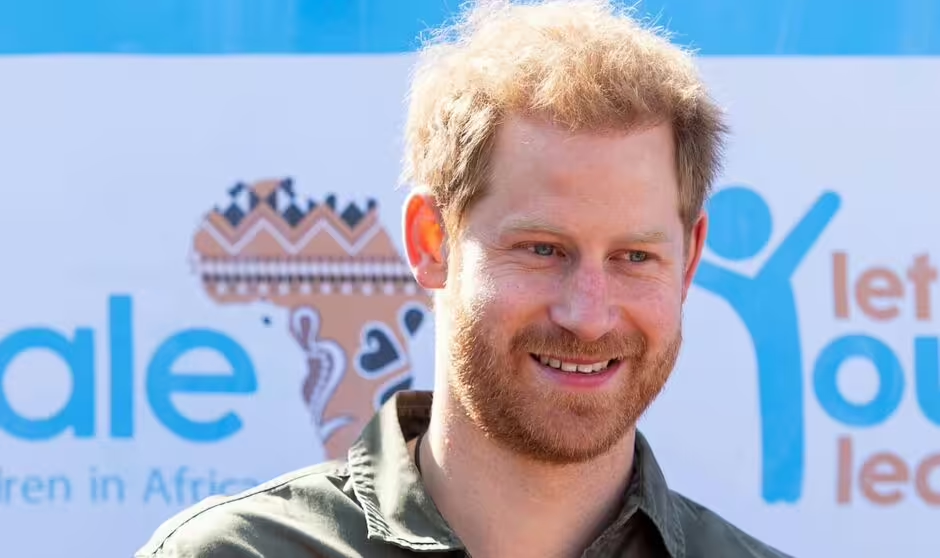
A bitter dispute at an African charity founded to honour Diana, Princess of Wales, has escalated into a High Court lawsuit, with Prince Harry facing allegations of defamation brought by the very organisation he helped establish.
Sentebale, the charity created in 2006 to support vulnerable young people affected by HIV in Lesotho and Botswana, filed legal action in London last month, according to court records reviewed on Friday. The case names the Duke of Sussex and his long-time friend and associate Mark Dyer, who serves as a trustee, in claims relating to alleged libel or slander. Details of the filings have not yet been made public.
The legal action marks a dramatic deterioration in relations between Prince Harry and the charity, which he co-founded alongside Prince Seeiso of Lesotho in memory of his late mother. For nearly two decades, Sentebale has been closely associated with the Duke’s charitable identity, forming a cornerstone of his work in southern Africa.
However, tensions began to surface in 2023 amid disagreements over a new fundraising strategy and the broader direction of the organisation. The dispute intensified behind the scenes before spilling into public view, culminating in the resignation of both co-founders as patrons in March 2025.
At the time, Prince Harry and Prince Seeiso issued a joint statement suggesting that the relationship between the board of trustees and its chair, Sophie Chandauka, had become irreparably strained. The breakdown in governance, they indicated, left them with little choice but to step back from their formal roles.
Ms Chandauka responded forcefully, accusing Prince Harry of orchestrating a campaign of bullying and harassment designed to force her removal. The claims added a deeply personal dimension to what had initially appeared to be a strategic disagreement, further fuelling scrutiny of the charity’s internal governance.
The dispute prompted an investigation by the Charity Commission for England and Wales, which examined allegations surrounding the leadership conflict. In its findings, published in August 2025, the regulator criticised both sides for allowing the disagreement to unfold so publicly, warning that the row had caused reputational harm to the organisation.
While the Commission did not find evidence of systemic bullying or misogyny within Sentebale, it concluded that the manner in which the dispute was handled risked undermining the charity’s mission.
“Sentebale’s problems played out in the public eye, enabling a damaging dispute to harm the charity’s reputation, risk overshadowing its many achievements, and jeopardising the charity’s ability to deliver for the very beneficiaries it was created to serve,” said David Holdsworth, chief executive of the Commission, at the time.
The watchdog’s intervention underscored concerns that governance failures, rather than individual misconduct, lay at the heart of the crisis. Nonetheless, the findings did little to resolve tensions between the key figures involved.
Prince Harry’s representatives were openly critical of the Commission’s report, suggesting it failed to fully address the issues raised by the Duke and his allies. By contrast, Ms Chandauka welcomed the conclusions, portraying them as a vindication of her position and leadership.
The High Court claim now threatens to prolong the dispute and further expose the inner workings of a charity once widely praised for its impact. Legal experts note that defamation cases can hinge on nuanced interpretations of statements made both publicly and privately, raising the prospect of a protracted and potentially damaging process for all parties involved.
For Sentebale, the stakes are particularly high. Founded with the aim of supporting children and young people living with HIV — many of whom face stigma, poverty and limited access to healthcare — the organisation has long relied on its high-profile patrons to attract international attention and funding.
The ongoing conflict risks diverting focus from that mission at a time when charities globally face mounting financial pressures. Observers warn that continued infighting could erode donor confidence and weaken the organisation’s ability to deliver programmes on the ground.
For Prince Harry, the lawsuit represents another legal challenge amid an already complex relationship with public institutions in the United Kingdom. It also raises questions about the future of his charitable engagements, particularly those rooted in his earlier royal role.