
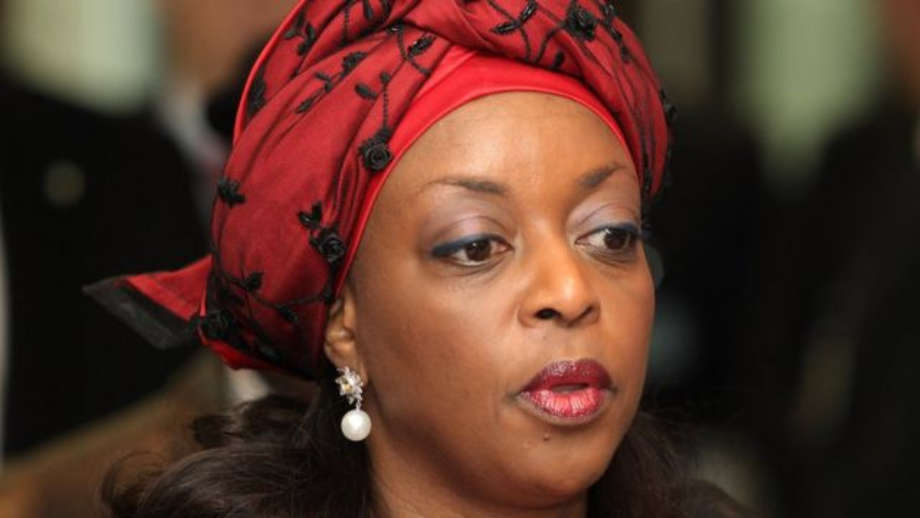
Former Nigerian oil minister Diezani Alison-Madueke appeared in a London court this week at the start of a long-anticipated corruption trial that has drawn renewed attention to the global reach of Britain’s anti-bribery laws and the legacy of alleged graft linked to Nigeria’s oil sector.
Alison-Madueke, 65, who served as Nigeria’s minister of petroleum resources between 2010 and 2015 and later became the first woman to lead the Organisation of the Petroleum Exporting Countries (OPEC), is accused of accepting bribes worth at least £100,000, alongside a series of luxury benefits, in exchange for using her office to influence the award of lucrative oil and gas contracts. She denies all charges.
The case, being heard at Southwark Crown Court, is expected to last several months and represents one of the most high-profile corruption prosecutions involving a former African cabinet minister ever to be brought before a UK court. Prosecutors allege that Alison-Madueke exploited her position at the apex of Nigeria’s most powerful ministry, overseeing an industry that accounts for the bulk of the country’s export earnings, to enrich herself and associates.
According to the prosecution, the alleged bribes took the form of cash payments and a range of personal benefits, including the use of chauffeur-driven vehicles, private flights, high-end accommodation in London and the payment of significant living expenses in the UK. These benefits, the court was told, were provided by businessmen seeking favourable treatment in the allocation of oil licences and contracts worth many millions of pounds.
The charges against Alison-Madueke include multiple counts of accepting bribes and a charge of conspiracy to commit bribery. The alleged offences date back more than a decade, to a period when Nigeria was enjoying high global oil prices and when the oil ministry wielded extraordinary influence over the country’s economy. Prosecutors say that key elements of the alleged conduct took place in the UK, bringing the case within the scope of British jurisdiction.
Alison-Madueke, who has lived in the UK for several years, was arrested in London in 2015 as part of a wider investigation into suspected corruption linked to Nigeria’s oil industry. She was later charged under the UK’s Bribery Act, legislation widely regarded as one of the most robust anti-corruption regimes in the world. She has been on bail while contesting the case, which has faced repeated delays owing to its complexity and the cross-border nature of the alleged offences.
In court, Alison-Madueke appeared composed as proceedings began, entering a plea of not guilty. Her legal team has argued that the prosecution’s case rests on mischaracterisations of legitimate personal and financial arrangements and that the alleged benefits do not meet the legal threshold required to establish bribery under UK law. The defence is also expected to challenge the reliability of witnesses and the interpretation of financial evidence.
The trial has been closely watched in Nigeria, where Alison-Madueke remains a deeply controversial figure. During her time in office under former president Goodluck Jonathan, she was one of the most powerful individuals in the country, overseeing not only the petroleum ministry but also the state oil company. Supporters credit her with attempting reforms in a notoriously opaque sector, while critics accuse her of presiding over an era of unchecked corruption.
Her prosecution in London forms part of a broader international effort to trace and recover assets allegedly linked to corruption in Nigeria. Over the past decade, authorities in several countries have seized properties, bank accounts and other assets believed to be connected to illicit oil revenues. Some of these assets have since been repatriated to Nigeria, although campaigners have questioned whether recovered funds are always transparently managed or used for public benefit.
Anti-corruption advocates say the UK trial carries symbolic importance, demonstrating that senior political figures cannot necessarily evade accountability by moving assets or residences abroad. They argue that the use of British courts to prosecute alleged foreign corruption reflects a growing willingness among western governments to confront the role their financial systems have played in enabling kleptocracy.
Others, however, view the case through a more sceptical lens. Some Nigerian commentators have framed the prosecution as an example of selective justice, noting that corruption in the oil industry has long involved multinational corporations and foreign intermediaries as well as domestic officials. They argue that focusing on individual African politicians risks obscuring the broader systemic failures that allow corruption to flourish.
Legal experts say the outcome of the trial could have far-reaching implications. A conviction would mark one of the most significant applications of the UK Bribery Act against a former foreign minister and could reinforce London’s reputation as a venue for transnational corruption cases. An acquittal, by contrast, would raise questions about the evidentiary hurdles involved in prosecuting complex, historic financial crimes.
For Nigeria, the case reopens unresolved debates about accountability, governance and the management of natural resources. Despite repeated promises by successive governments to tackle corruption, few senior figures from the oil sector have faced final criminal judgments. Many Nigerians remain sceptical that justice, whether delivered at home or abroad, will lead to meaningful change.