
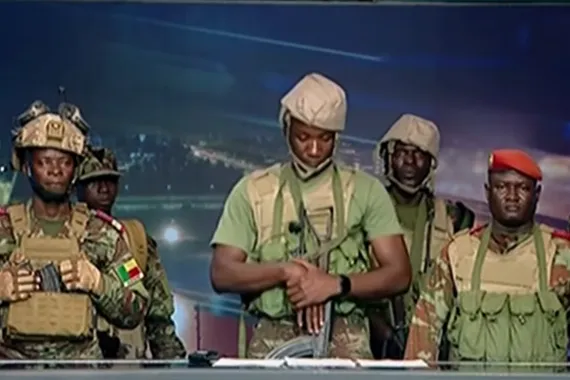
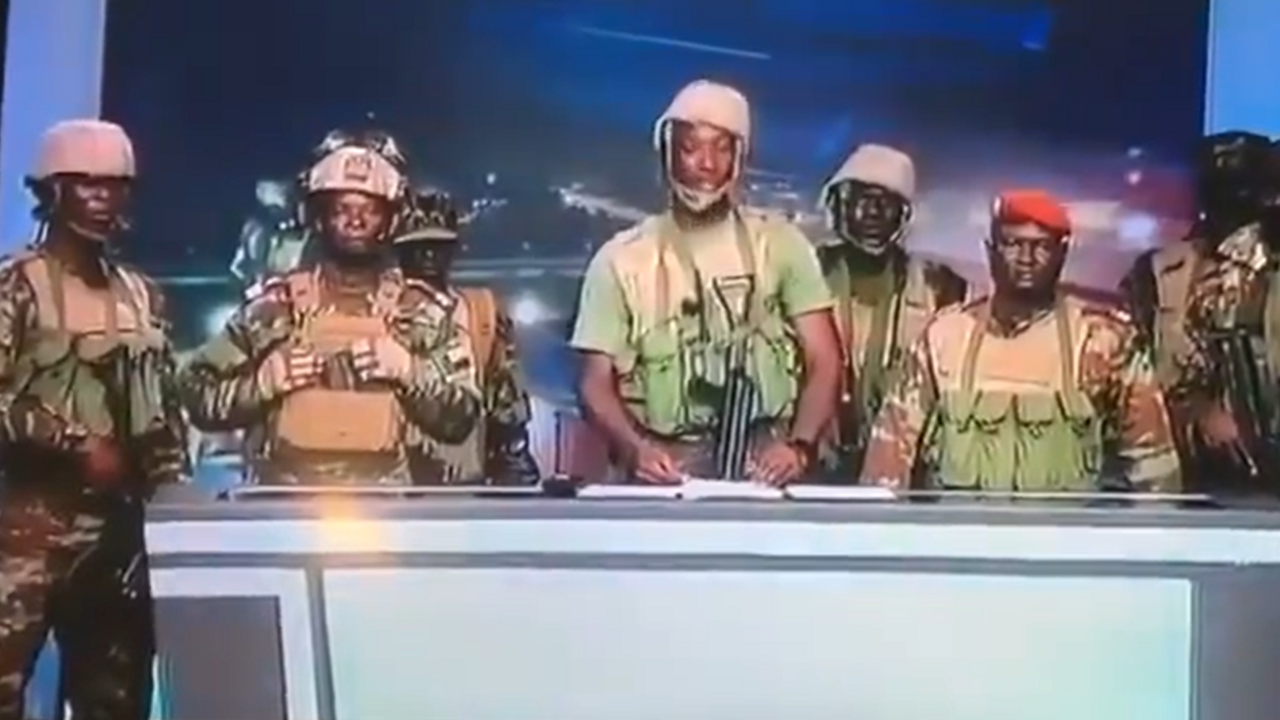
COTONOU, Benin — Benin was thrust into sudden turmoil when a group of soldiers stormed state television and announced that the government had been dissolved, the constitution suspended, and President Patrice Talon removed from power. Calling themselves the Military Committee for Refoundation and proclaiming Lt. Col. Pascal Tigri as their new leader, the soldiers declared that all state institutions had ceased to exist. Their appearance on state TV marked the beginning of the most dramatic political rupture the country has experienced in more than three decades. Moments later, the national broadcast signal was abruptly cut, plunging citizens into confusion and leaving the fate of their elected leaders veiled in uncertainty.
Gunfire reportedly echoed around the presidential residence as the coup unfolded, fueling speculation about clashes between loyalist forces and the mutineers. Government spokesperson Wilfried Houngbedji attempted to reassure the public with a terse statement claiming that “everything is fine,” but he offered no explanation and provided no information on Talon’s whereabouts. For a nation long regarded as a rare democratic success story in West Africa, the chaos struck like a lightning bolt.

Benin’s history is marked by political instability in the decades following independence from France in 1960, when repeated coups and military rule became the norm. That era shifted dramatically in 1991, when the country transitioned to a multiparty democracy after years of Marxist-Leninist military leadership. For more than 30 years, Benin has been held up as one of the region’s most stable and democratic countries—a reputation now shattered in a single day.
Patrice Talon, in power since 2016, had been preparing to step down after next April’s presidential election. His party’s chosen successor, former finance minister Romuald Wadagni, was widely expected to win, especially after the electoral commission barred opposition candidate Renaud Agbodjo for lacking sufficient sponsors. Tensions were already simmering in the political class. Earlier this year, two associates of Talon were sentenced to 20 years in prison for allegedly plotting a coup in 2024. And in a controversial move last month, the legislature extended presidential terms from five to seven years—while claiming to preserve the two-term limit. Critics argued that the change signaled an erosion of democratic guardrails. The military’s dramatic intervention now raises questions about whether those tensions had reached a breaking point long before guns were fired.
The economic consequences of the sudden takeover could be severe. Benin’s economic progress in recent decades has relied heavily on investor confidence, regional trade, and steady institutional reforms. A military junta dissolving the government creates an environment of uncertainty that can freeze foreign investment, disrupt commercial activity, and jeopardize development aid. For ordinary citizens, who depend on price stability, agricultural flows, and increasingly formalized markets, even a short period of political instability could have long-term economic repercussions. Benin had been positioning itself as a rising commercial hub in the Gulf of Guinea—now that momentum risks being halted or reversed.
Security concerns are growing, both within Benin and across an already volatile region. A power vacuum of this scale invites internal instability, factional rivalries within the armed forces, and potential human rights abuses as the junta consolidates authority. West Africa is already experiencing a wave of coups, with soldiers in Guinea-Bissau recently ousting their president after a contested election. Each successful takeover emboldens the next, creating a domino effect that threatens the entire regional order. Benin, once the exception to the rule, is now part of the pattern.
For the moment, Beninese citizens wait anxiously—without clear leadership, without reliable information, and without certainty about what comes next. What began with soldiers marching onto a television set has now thrown a nation into suspense, forcing the world to watch closely as one of West Africa’s most celebrated democracies grapples with a sudden, stunning collapse.