
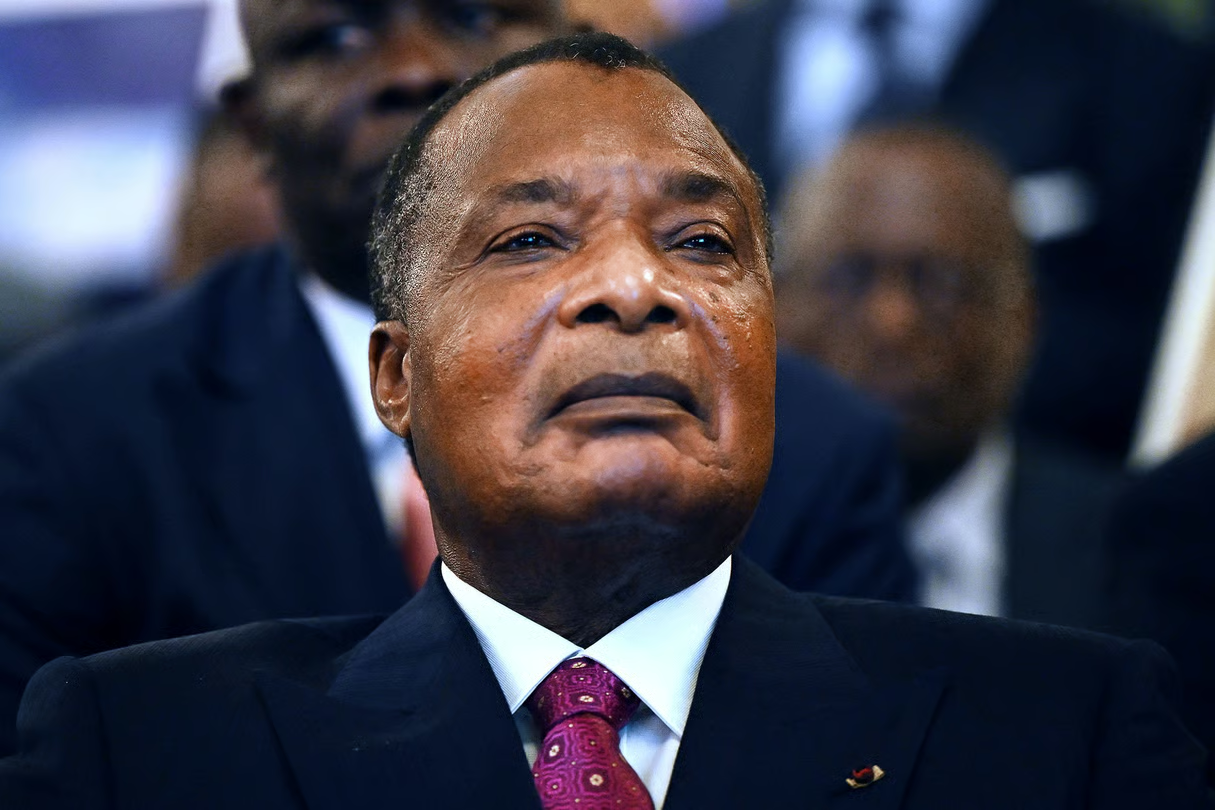
When Denis Sassou Nguesso announced that he would once again seek the presidency of the Republic of the Congo, the words themselves were brief. The weight behind them was not. At 82 years old, and after more than four decades at the helm of the oil-rich Central African state, Sassou Nguesso’s decision to run in elections scheduled for 15 March marks yet another chapter in one of Africa’s longest and most entrenched presidencies.
Standing before a large crowd in the southern district of Ignie, the veteran leader framed his announcement as a response to popular demand and unfinished business. He pledged to tackle food insecurity, expand agricultural production and offer greater support to young people struggling to find work. For his supporters, the message was familiar and reassuring: continuity, experience and stability in a region often marked by political volatility. For critics, it was a reminder of how enduring power can narrow the space for democratic renewal.
Sassou Nguesso first came to power in 1979, during an era when Congo was governed as a one-party Marxist state. He ruled until 1992, lost the presidency during the country’s brief experiment with multiparty democracy, and returned five years later following a civil war that reshaped the political landscape. Since then, he has remained in office almost uninterrupted, winning successive elections and consolidating authority through constitutional changes and tight control over political institutions.
With a combined 42 years in power, interrupted only by that five-year interlude, Sassou Nguesso ranks among Africa’s longest-serving leaders, surpassed by only a handful of presidents who have similarly extended their rule deep into old age. A constitutional revision a decade ago removed age limits and reset term counts, clearing the way for his continued candidacy and effectively neutralising legal obstacles to prolonged rule.
The coming election is widely expected to follow a familiar pattern. Congo’s opposition remains fragmented and weakened, with major parties struggling to mount a credible challenge. Some have already indicated they will not field candidates, citing an uneven political playing field and long-standing concerns about the credibility of the electoral process. Previous votes have been marked by allegations of irregularities, restrictions on media freedom and limited space for dissent, claims the government has consistently denied.
Yet the themes Sassou Nguesso has chosen to emphasise resonate deeply in a country grappling with economic contradictions. Despite its oil wealth, Congo remains heavily dependent on food imports. Vast stretches of fertile land lie uncultivated, with only a small fraction of arable territory actively farmed. This reliance leaves the country exposed to global price fluctuations, a vulnerability that has become increasingly visible amid rising costs and periodic shortages.
Food security has therefore emerged as both an economic and political issue. Addressing a crowd at the Ignie event, Sassou Nguesso promised renewed investment in agriculture and rural development, presenting domestic food production as a pillar of national sovereignty. Similar pledges have been made before, but progress has been slow, hindered by poor infrastructure, limited access to credit and decades of underinvestment outside the oil sector.
Youth unemployment poses an even more pressing challenge. Congo has a young population, with nearly half of working-age citizens under 25, yet job opportunities remain scarce. Many young people survive through informal work, while others see migration as their only route to economic security. Disillusionment among the youth is widespread, and while open protest is rare, frustration simmers beneath the surface.
The economy’s heavy reliance on oil continues to shape both opportunity and inequality. Hydrocarbons account for the bulk of export revenues and government income, but the benefits are unevenly distributed. Poverty remains widespread, particularly outside the capital, Brazzaville, where access to electricity, healthcare and basic services is inconsistent. Critics argue that decades of oil production have failed to translate into broad-based development, entrenching dependence rather than diversification.
Supporters of the president counter that his longevity has provided stability in a region that has seen coups, conflicts and abrupt leadership changes. Sassou Nguesso has positioned himself as an experienced statesman, cultivating diplomatic ties across Africa and beyond, and presenting Congo as a reliable partner in energy and regional security. His allies say that continuity of leadership is essential for navigating economic uncertainty and maintaining peace.
Civil society groups, however, warn that prolonged rule carries its own risks. They argue that concentration of power has weakened institutions, hollowed out accountability and stifled political competition. For many Congolese, elections have come to symbolise continuity rather than choice, reinforcing a sense of resignation about the possibility of meaningful change through the ballot box.
As the campaign period approaches, public debate remains muted. State institutions, security forces and much of the media operate under close oversight, limiting the visibility of dissenting voices. In this environment, Sassou Nguesso’s candidacy appears less a surprise than a confirmation of an established order.
What another term would mean in practical terms remains uncertain. The president has promised reforms, investment and opportunity before, with mixed results. His age has also become an unspoken subject of speculation, raising questions about succession in a system heavily personalised around his leadership.