
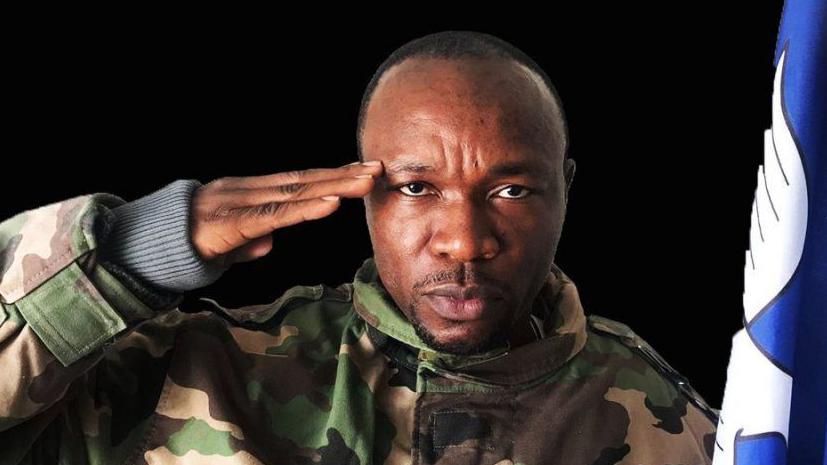
A Cameroonian separatist leader detained in Norway is now suspected of war crimes, Norwegian police have said, in a case that could become the country’s first prosecution involving crimes committed in a foreign civil conflict.
Lucas Cho Ayaba, a prominent figure in Cameroon’s anglophone separatist movement, was arrested in September 2024 and has been held in custody since then over concerns he could flee the country. On Monday, Norway’s national criminal investigation service, Kripos, confirmed that the case against him has expanded to include allegations of war crimes, attempted murder and unlawful deprivation of liberty.
Ayaba, who is also known as Cho Lucas Yabah, had previously been suspected of inciting crimes against humanity in connection with Cameroon’s long-running separatist conflict. Investigators now believe he played a central role in directing or encouraging violence linked to the armed struggle in the country’s English-speaking regions.
In a statement, Kripos said the allegations relate to serious violations of international law committed during the conflict, which has devastated Cameroon’s northwest and southwest regions since 2016. Police did not provide details of the alleged crimes but said the investigation was ongoing and complex.
Prosecutor Anette Berger said Norway had a responsibility under international law to ensure it did not become a safe haven for individuals accused of the gravest crimes. She described the case as unprecedented, noting that it would be the first time Norwegian authorities had pursued such charges relating to an overseas conflict.
“The seriousness of the allegations means we must carry out a thorough investigation,” Berger said, adding that the legal threshold for such cases was high.
Ayaba’s lawyer, Morten Engesbak, confirmed that his client was the suspect named by police and said Ayaba firmly denied all accusations. Engesbak said Ayaba rejected claims that he had committed or encouraged violence against civilians and would contest the allegations.
Police have asked the court to extend Ayaba’s detention by a further eight weeks while investigators continue to gather evidence. Authorities have argued that his release could pose a flight risk given the international nature of the case.
The conflict in Cameroon has its roots in long-standing linguistic and political divisions. Anglophones, who make up about 20% of the population, have long complained of marginalisation in a state dominated by French language and legal traditions. Tensions escalated in 2016 after the government of President Paul Biya violently suppressed peaceful protests by English-speaking lawyers and teachers demanding greater autonomy.
What began as civil unrest has since spiralled into an armed conflict between government forces and separatist militias seeking an independent state known as Ambazonia. Ayaba is a leading figure in the Ambazonia Defence Forces, one of several armed groups involved in the fighting.
The violence has had a devastating impact on civilians. Human Rights Watch estimates that at least 6,000 civilians have been killed, with many more displaced, schools destroyed and entire communities caught between warring sides.
Norwegian authorities have not indicated when a decision on formal charges will be made. For now, the case marks a rare attempt by a European state to hold an individual accountable for alleged crimes committed far beyond its borders, under the principle of universal jurisdiction.