
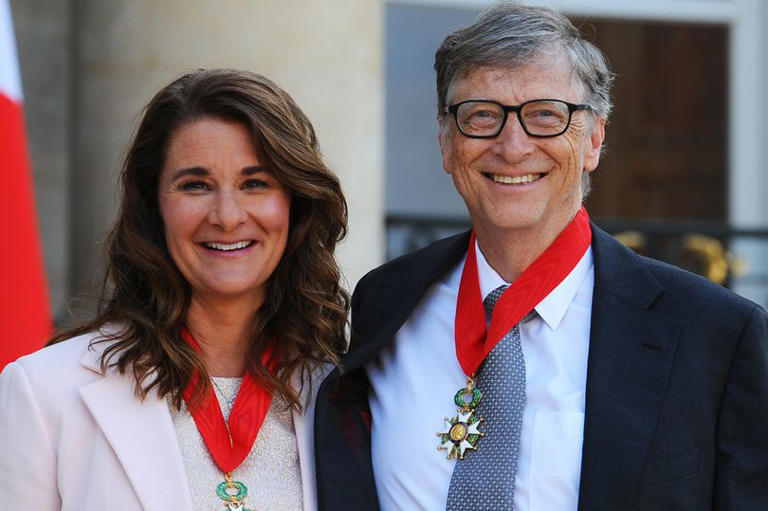
Microsoft co-founder Bill Gates has transferred nearly $8bn (£6.2bn) to a charity run by his former wife, Melinda French Gates, in one of the largest publicly disclosed philanthropic payments ever revealed.
The contribution, amounting to $7.88bn, was made in 2024 to Pivotal Philanthropies Foundation, the organisation founded by French Gates, and has only now come to light through newly released US tax filings. The disclosure sheds fresh light on how the financial and philanthropic dimensions of one of the most high-profile divorces of the 21st century are being unwound.
The payment forms a major part of a broader $12.5bn settlement agreed between the former couple following their divorce and French Gates’ decision to step down from the Bill & Melinda Gates Foundation in May last year. A spokesperson for Pivotal Philanthropies confirmed that the full sum agreed upon in the settlement has now been transferred.
Bill and Melinda French Gates announced the end of their 27-year marriage in May 2021, bringing to a close not only a personal partnership but also one of the most influential philanthropic alliances in modern history. Together, they had built the Gates Foundation into a global powerhouse, spending tens of billions of dollars on initiatives targeting infectious disease, global health, education and poverty reduction.
In the years following the divorce, however, their shared philanthropic mission has steadily divided into separate paths. French Gates’ departure from the Gates Foundation in spring 2024 marked a decisive break, allowing her to focus on causes she has long supported independently, particularly those related to women’s rights, gender equity and social mobility.
Pivotal Philanthropies Foundation, which French Gates launched in 2022, has been transformed by the scale of the transfer. According to filings, the foundation’s assets stood at around $604m in 2023. By the end of 2024, after Gates’ contribution, that figure had surged to approximately $7.4bn, instantly placing Pivotal among the largest private foundations in the United States.
The $7.88bn donation is listed in the charity’s 2024 filings as a contribution from Gates himself. Analysts say it represents an unusual moment in modern philanthropy, not only because of its size but because it arises directly from a divorce settlement rather than a conventional charitable endowment or bequest.
“Large gifts between foundations are not uncommon,” said one philanthropy expert, “but this scale, and the context of a marital separation, is virtually unprecedented.”
Between its launch and the end of 2024, Pivotal Philanthropies distributed more than $540m in grants, supporting initiatives focused on women’s economic opportunity, workplace equity, youth mental health and community-led programmes in the US and abroad. With its vastly expanded resources, the foundation is expected to accelerate its grant-making significantly in the coming years.
Public interest in the Gates divorce has remained high, not least because of the reasons cited by French Gates for ending the marriage. She has spoken openly about her discomfort with Bill Gates’ past interactions with Jeffrey Epstein, the convicted sex offender, describing those associations as “abhorrent” and saying they played a role in her decision to divorce, though she has stressed the split was not caused by any single factor.
Bill Gates has since described his meetings with Epstein as a “mistake” and said he regretted them, maintaining that his intentions were linked to potential fundraising for philanthropy rather than personal friendship.
While the $7.88bn transfer has attracted widespread attention, observers argue that the deeper significance lies in what it represents for the future of the Gates philanthropic legacy. The Gates Foundation continues its global health and development work under Gates’ leadership, while Pivotal Philanthropies is carving out a distinct role focused on social equity and women’s empowerment.
Gates, whose personal fortune is estimated at more than $100bn, has repeatedly pledged to give away the vast majority of his wealth during his lifetime. French Gates has similarly emphasised her commitment to redistributing wealth in ways that directly benefit women, families and communities.
As private philanthropy increasingly fills gaps left by governments and international institutions, the deployment of such vast sums will continue to shape debates about power, accountability and social responsibility. Whether Pivotal Philanthropies emerges as a model of targeted, large-scale giving or raises new questions about the influence of concentrated wealth, the transfer marks a defining moment in the post-divorce evolution of one of the world’s most famous philanthropic fortunes.