
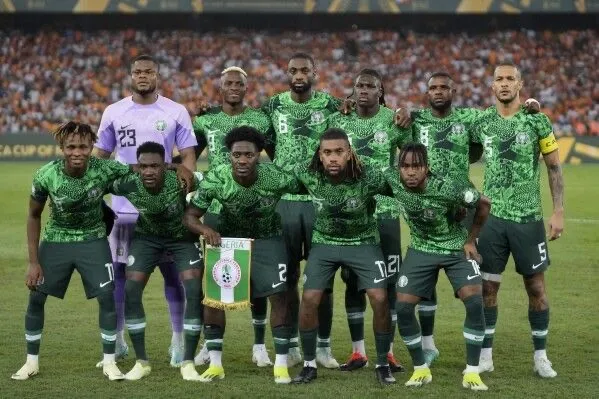
Nigeria’s last-gasp attempt to rescue its 2026 FIFA World Cup qualification campaign has officially collapsed. FIFA has rejected the Super Eagles’ protest against the Democratic Republic of the Congo (DRC), confirming that the controversial CAF playoff final result will stand and bringing Nigeria’s World Cup dream to a painful and decisive end.
The ruling upholds DR Congo’s dramatic 4–3 victory on penalties following a 1–1 draw on November 16 in Rabat, Morocco, a result that knocked Nigeria out of contention and pushed the Leopards one step closer to a historic appearance at the expanded 48-team World Cup. For the Super Eagles, it marks another bitter chapter in a qualification campaign filled with missed chances, frustration, and off-field drama.
In mid-December, the Nigeria Football Federation (NFF) formally lodged an appeal with FIFA, alleging that several DRC players had breached FIFA’s eligibility and dual-nationality regulations. Central to the complaint was high-profile defender Aaron Wan-Bissaka, along with other members of the Congolese squad whom Nigerian officials claimed were ineligible.
Nigeria’s argument leaned heavily on Congolese domestic law, which does not recognize dual citizenship. The NFF contended that some DRC players held European passports at the time of the playoff final and therefore should not have been allowed to represent the Leopards. The federation hoped that a favorable ruling could overturn the match result, potentially disqualify DR Congo, and hand Nigeria a dramatic administrative lifeline back into the qualification race.
That hope has now been firmly extinguished.
After reviewing the submission, FIFA’s disciplinary bodies concluded that Nigeria failed to provide sufficient evidence to prove any breach of its regulations. According to FIFA’s ruling, all the players named in the protest had been properly cleared and registered under FIFA’s eligibility framework.
Crucially, FIFA reiterated that international eligibility is governed by its own statutes, not by the domestic citizenship laws of individual countries. As long as a player holds valid national documentation and has completed the required eligibility process, they are permitted to represent that nation. On that basis, FIFA ruled that no rules were violated and that no changes would be made to the sporting result.
DR Congo therefore retains its place in the inter-confederation playoff mix, while Nigeria’s administrative appeal route has officially been closed.
The controversy stems from a gripping playoff final that lived up to its high stakes. Nigeria struck first through star striker Victor Osimhen, who gave the Super Eagles hope with a crucial opening goal. But DR Congo responded with resilience, leveling the match through Cédric Bakambu and forcing extra tension into an already nerve-wracking encounter.
With no winner after regulation time, the match went to penalties. In the shootout, the Leopards showed composure under pressure, edging Nigeria 4–3 and sparking wild celebrations among the Congolese camp. For Nigeria, it was another painful exit decided by the finest of margins.
Officials from FECOFA, the Congolese football federation, welcomed FIFA’s decision, insisting their players were fully compliant with all eligibility requirements. The ruling validated their stance and allowed the team to focus fully on the next challenge ahead.
On the Nigerian side, disappointment was palpable. While the NFF acknowledged the ruling and expressed respect for FIFA’s processes, the sense of frustration among fans and stakeholders remains deep. Many had clung to the appeal as a final chance to salvage a campaign that never quite found its rhythm.
Bigger Questions for Nigeria
Beyond the legal defeat, the ruling underscores deeper issues within Nigerian football. Failing to qualify for the World Cup through both sporting performance and administrative avenues prolongs a period of underachievement for a nation long regarded as one of Africa’s traditional powerhouses.
As DR Congo prepares for its inter-confederation playoff with dreams of reaching the global stage, Nigeria must now turn inward. Rebuilding confidence, restructuring long-term plans, and restoring the Super Eagles’ competitive edge will be critical as attention shifts toward future tournaments.
For now, though, the verdict is final: the road to 2026 ends here for Nigeria — not on the pitch, but in FIFA’s courtroom.