
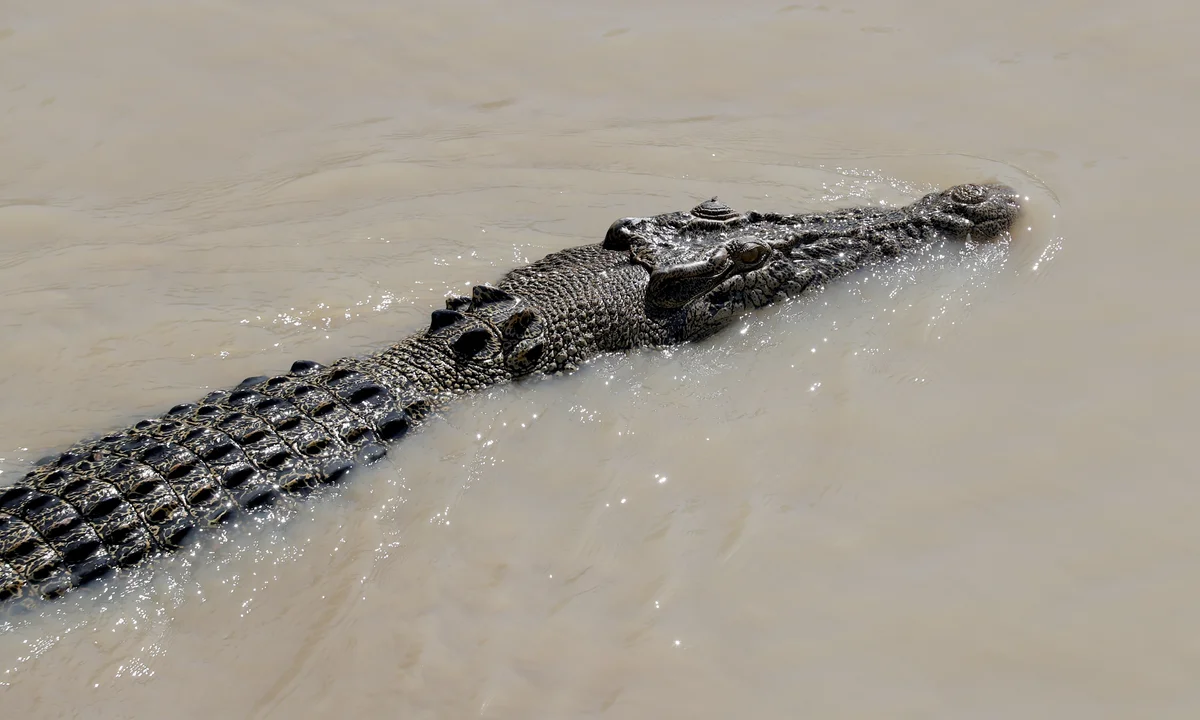
A 52-year-old fisherman has been killed in eastern Zambia after being attacked by a crocodile while attempting to flee a herd of elephants, police have said.
The victim, identified as Dean Nyirenda, was returning from a fishing trip with two companions on Wednesday when the group encountered elephants close to the Luangwa River, a wildlife-rich area near Zambia’s border with Mozambique.
According to police, the men were walking along the riverbank when a herd of elephants emerged nearby. Fearing a charge, the trio scattered in different directions to escape. In the chaos, Mr Nyirenda ran towards a stream connected to the river and jumped into the water in an attempt to avoid the animals.
Moments later, he was attacked by a crocodile, which bit him on the thigh. Police said Mr Nyirenda attempted to fight off the animal and managed to pull himself out of the water, but he had suffered severe injuries and lost a large amount of blood. Despite efforts by his companions to help him, he died at the scene.
A senior police officer described the incident as “deeply unfortunate” and said it illustrated the risks faced by people living and working close to wildlife areas. An investigation into the death has been opened, though police have said it appears to have been a tragic accident.
The Luangwa Valley is one of Zambia’s most important conservation regions and is home to large populations of elephants, crocodiles and other dangerous wildlife. The river itself is known for its high number of Nile crocodiles, which can grow up to five metres in length and are responsible for dozens of fatal attacks across southern Africa each year.
Zambia has one of the largest elephant populations on the continent, estimated at more than 130,000 animals. In recent years, encounters between humans and wildlife have increased as farming, fishing and settlement expand closer to protected areas and waterways.
Conservation officials have warned that drought, population growth and pressure on land are forcing both people and animals into closer contact, raising the risk of fatal encounters. Fishermen are considered particularly vulnerable, as they often work along riverbanks at dawn and dusk, when wildlife is most active.
The Zambian government has repeatedly called for greater awareness and caution among communities living near national parks and rivers. Measures under discussion include improved warning systems, community patrols and education campaigns aimed at reducing risky behaviour around wildlife habitats.
However, wildlife experts say that preventing such incidents entirely is difficult in rural regions where people depend on natural resources for their livelihoods. Elephants are protected under Zambian law, and crocodiles are also a key part of the river ecosystem, limiting the scope for population control.
The death of Mr Nyirenda has prompted renewed debate about how to balance conservation with human safety, as Zambia seeks to protect its wildlife while safeguarding communities that live alongside it.
Police have extended condolences to Mr Nyirenda’s family and urged residents in the area to remain vigilant when travelling near rivers or through known wildlife corridors.