
For decades, a recurring strategy among many Igbo politicians has been the pursuit of proximity to power—what is often described as aligning with the “centre.” In theory, this approach should guarantee influence, access, and, ultimately, development for the Southeast. In practice, it has produced very little not beyond individual aggrandizement.
The record is difficult to defend. Many of these politicians moved from one-time dominant People’s Democratic Party (PDP) to now All Progressives Congress (APC), presenting their defections as strategic decisions made in the interest of Ndigbo. They argued that being close to federal power would translate into projects, appointments, and economic inclusion for the region. Yet, over time, this promise has largely remained unfulfilled.
During the administrations of President Olusegun Obasanjo (PDP), President Umaru Musa Yar’Adua (PDP) and President Goodluck Jonathan (PDP), the South-East remained politically aligned in various forms with the “centre”. Yet, despite this alignment, the region still struggled to secure transformative federal projects that matched its economic and demographic significance.
The same pattern became even more visible during the eight-year administration of the late President Muhammadu Buhari (APC). Beyond the Second Niger Bridge and a few kilometres of rehabilitation on sections of the Onitsha–Enugu and Port Harcourt road corridors, it is difficult to identify other major federal infrastructure projects executed in the South-East.
Under the current administration of President Bola Ahmed Tinubu, there have been ongoing rehabilitation and reconstruction of federal road projects in the Southeast. However, apart from these limited interventions, it remains unclear what large-scale, transformative federal projects have been initiated or completed in the Southeast since the beginning of his tenure.
What, then, is the legacy of this alignment to the “centre”? It is not the construction of transformative infrastructure. It is not the decentralisation of economic opportunities such as seaports, aviation hubs, superhighways, or standard gauge rails. It is not a visible shift in federal attention towards the Southeast. Instead, the outcomes have been, in many cases, negligible. The gap between expectation and delivery is too wide to ignore.
This is not a matter of emotion; it is a matter of record.
This leads to a fundamental and unavoidable question: do we not have Igbo political actors who have consistently aligned themselves with the “centre” across these administrations? If political alignment is truly a reliable pathway to development, then the South-East should, by now, be experiencing a visible and sustained transformation. Yet, the evidence on the ground suggests otherwise.
The uncomfortable reality is that many Igbo politicians who have pursued this strategy of alignment to the “centre” have little to show beyond personal political aggrandizement. Their legacy is not defined by structural transformation but by transactional politics—an approach in which political loyalty is exchanged for individual benefit rather than collective regional progress.
This approach has also weakened the bargaining power of the Southeast. When politicians align too quickly and too quietly with the “centre”, they often lose the leverage needed to negotiate meaningful concessions. Influence, in such cases, becomes symbolic rather than substantive. The region is seen as compliant, but not necessarily consequential.
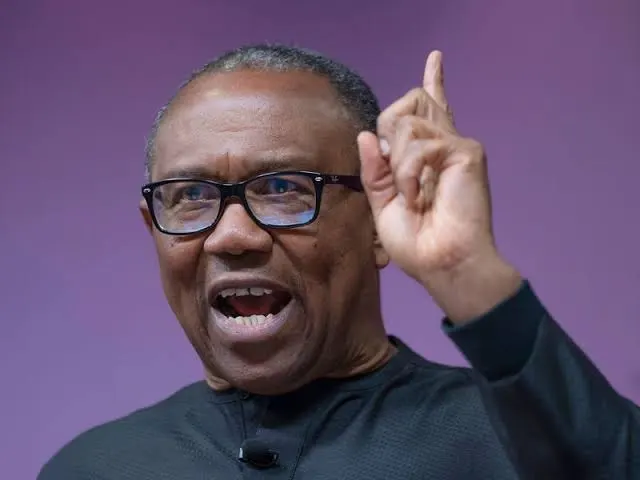
It is against this backdrop that Peter Obi emergence is different and strategic to Ndigbo. Unlike many before him, Obi is not negotiating for relevance within an existing power structure; he is challenging the structure itself. That distinction matters.
Obi’s political trajectory reflects a deliberate departure from the transactional politics of convenience. Rather than seeking validation from established centres of power, he has built a movement that draws strength from public engagement, especially among young Nigerians. His message is not rooted in access but in accountability; not in proximity to power, but in the redefinition of how power should function.
This is what makes him an opposition figure in the truest sense—not merely someone outside the ruling party, but someone who questions the underlying assumptions of the political system. He does not accept that influence must come from alignment. He does not assume that relevance must be negotiated behind closed doors. Instead, he presents an alternative: that credibility, competency and compassion, and public trust can themselves become sources of power.
This approach has unsettled the traditional political order. For those accustomed to transactional arrangements, Obi’s model is disruptive. It shifts the focus from elite negotiation to mass participation. It replaces quiet alignment with visible advocacy. And, perhaps most importantly, it demands results rather than promises.
Critics may argue that opposition without access to power limits effectiveness. But that argument overlooks a critical point: access without impact is equally limited. The experience of many Igbo politicians who aligned with the “centre” illustrates this clearly. Being present in the corridors of power is not the same as shaping outcomes.
Obi’s challenge, therefore, is not just to win elections but to sustain a different kind of political engagement—one that prioritises long-term structural change over short-term gains. His supporters see in him a figure who has already altered the conversation, moving it away from ethnic bargaining towards national reform.
In this new political era, Peter Obi stands apart—not because he is perfect, but because he represents a different approach. He is an opposition figure with clarity and purpose, not one driven by opportunistic alignment to the “centre”. In contrast, many Igbo politicians who have historically aligned with the “centre” have little to show for it beyond personal gain. Their legacy is not one of transformation but of accommodation.
Whether Obi appears on the ballot again or not, whether he eventually becomes president or not, his impact is already undeniable. He has redefined political participation, not just for Ndigbo but for Nigeria as a whole. He has demonstrated that influence does not always come from proximity to power; sometimes, it comes from the courage to challenge it.
He is, in many respects, an enduring symbol—an icon of a political awakening that extends beyond ethnic identity into national consciousness.
Those who have aligned with the “centre” must now confront an uncomfortable question: beyond personal success, what have they truly achieved for the people they represent? Political relevance cannot be measured by titles alone. It must be measured by impact. They should focus less on discrediting Peter Obi and more on proving their own worth. Political relevance is not sustained by criticism or rhetoric; it is earned through tangible results.
For the Southeast, Peter Obi presents a choice. Continue with a model that has delivered limited returns, or embrace a more assertive, principle-driven approach to national politics. The former offers familiarity; the latter offers possibility.
Ndigbo, like every other group in Nigeria, deserve more than symbolic inclusion. They deserve a system that recognises their contributions, addresses their challenges, and invests in their future. Anything less is not just inadequate—it is unjust.
- Chidipeters Okorie is a Nigerian journalist, public affairs analyst, and media consultant known for his strong engagement in development reporting, political commentary, and public communication. He is the Editor-in-Chief of TimeAfrica Magazine.