

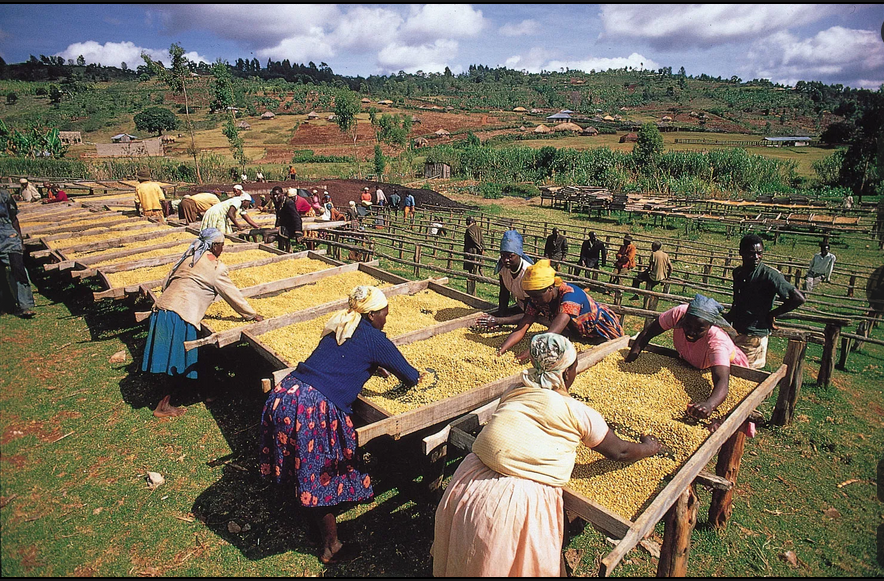
Kenya once stood proudly among the world’s premier coffee producers, its highland Arabica commanding admiration for its rich flavour and impeccable quality. For decades, the country’s economic identity was rooted in the coffee bean — a symbol of agricultural expertise, national pride, and reliable foreign-exchange earnings. Today, however, that story has shifted dramatically. Coffee is no longer Kenya’s leading export. Instead, the country’s most valuable export has become its people, sent abroad in ever-growing numbers to work for wages that, although modest by global standards, have become central to Kenya’s economic survival.
Coffee cultivation still plays a visible role in the national economy. Kenya produced roughly 48,000 to 50,000 metric tonnes of clean coffee in the 2022/23 season, earning around US$200 million in export revenue. The country maintains more than 110,000 hectares under coffee, and key markets in Europe and the United States remain loyal customers. Yet long-term trends tell a different story. Coffee acreage has contracted from around 170,000 hectares in the 1990s to less than 110,000 today, and production — once exceeding 130,000 tonnes annually — has fallen to roughly a third of that. Average yields sit at approximately 475 kilograms per hectare, barely half the productivity recorded in the early 1960s.

Against this decline, another economic force has surged: diaspora remittances. Money sent home by Kenyan workers abroad hit a record KES 666–674 billion in 2024, marking a substantial rise from the previous year. In dollar terms, remittances reached nearly US$5 billion, growing Kenya’s foreign-exchange reserves and supporting roughly 4 to 5 percent of national GDP. These inflows now outperform earnings from traditional exports such as tea, horticulture, tourism, and coffee combined.
Remittances have become vital to stabilising the Kenyan shilling, reducing pressure on the current account, and funding household consumption. Thanks in large part to these inflows, Kenya’s foreign reserves recently climbed to more than US$9 billion, covering nearly five months of imports — well above statutory minimums. For many Kenyan families, remittance money pays school fees, medical bills, rent, and daily necessities. For the government, it provides an indispensable cushion amid fiscal strain and rising debt obligations.
This economic reliance is driving an aggressive labour-export policy. Kenya aims to send hundreds of thousands of workers abroad each year, potentially reaching a target of one million. A majority are deployed to Gulf countries where demand for domestic workers is high. To out-compete established labour-exporting nations, Kenya often positions its workers as a lower-cost alternative. In some markets, Kenyan domestic workers earn up to 40 percent less than workers from countries with stronger labour-protection frameworks.
A sprawling recruitment industry underpins this model. About 700 licensed recruitment agencies operate in Kenya, many with influential backers. For each worker deployed abroad, agencies collect substantial fees — enough to turn significant profits even after deducting expenses for airfare, documentation, medical exams, and training.
To maximise these profits, regulatory requirements have been streamlined. Pre-departure training for domestic workers, once nearly a month long, has been reduced to just 14 days, with costs capped at around KES 12,000 per trainee. For some recruitment firms, these reductions translate into savings worth tens of millions of shillings when thousands of workers are deployed at scale. The export model is thus shaped around efficiency, volume, and low cost — a formula that benefits agencies and increases remittance inflows but raises serious concerns for worker welfare.
Human-rights groups continue to highlight the dangers. Kenyan domestic workers in the Gulf have reported cases of overwork, unpaid wages, physical abuse, sexual violence, and, in the most tragic situations, death. By offering its workers at comparatively low wages, Kenya weakens its negotiating position and increases vulnerability for citizens working abroad. Critics argue that economic strategy should not be built on the premise of cheap Kenyan labour, particularly when protections abroad are often weak or inconsistently enforced.
Efforts to strengthen protections or reform recruitment practices have at times met resistance, especially where powerful stakeholders benefit from the status quo. The political economy of labour export — with its lucrative fees and foreign-exchange gains — has created vested interests that complicate reform efforts.
Economic challenges at home reinforce this dependency. Kenya’s economic growth forecast has fluctuated, with estimates for 2024 revised downward to around 4.7 percent due to fiscal pressures, public debt, taxation frustration, and a slow recovery in key sectors. With domestic job creation lagging and unemployment, especially among youth, remaining high, labour migration becomes an attractive — though risky — economic release valve.
Meanwhile, in the central highlands once synonymous with flourishing coffee estates, change is unmistakable. Land under coffee has continued to shrink, with some farmers abandoning the crop due to inconsistent prices, high input costs, ageing trees, and limited access to modern agricultural support. Many have turned instead to real estate development or more profitable crops such as avocados, which promise higher returns and more stable markets.
Government efforts to revive coffee — including subsidised inputs, affordable credit, and seedling support — aim to restore the crop’s former glory. But the broader question lingers: can Kenya rebuild its agricultural backbone while simultaneously relying on exported labour as its economic lifeline?
The transformation from a coffee-exporting economy to a labour-exporting one is not simply a shift in revenue streams; it is a redefinition of national identity. Coffee evoked craftsmanship, heritage, and connection to the land. Labour export is more transactional, rooted in necessity, and reflective of deeper structural gaps in Kenya’s economic model.
As remittances surpass traditional exports and bind the nation’s finances ever more tightly to its global workforce, Kenya must confront the long-term implications. The strategy may deliver short-term stability, but it risks cementing a dependency on low-wage foreign employment rather than catalysing domestic industrial growth and local job creation.
The irony is profound. A nation once celebrated for producing some of the world’s finest coffee now derives much of its economic strength from the wages of workers toiling thousands of kilometres away. The aroma of roasted beans may still drift through Nairobi’s cafés, but the financial heartbeat of the country increasingly pulses from abroad — in monthly remittances wired home from the Gulf, Europe, and beyond.
Kenya now stands at a crossroads. Will it continue to rely on exporting its people, or will it chart a path that elevates both its land and its citizens at home? The answer will determine whether the country emerges as a nation defined by its resources — or by the labour of those compelled to leave in search of opportunity.