
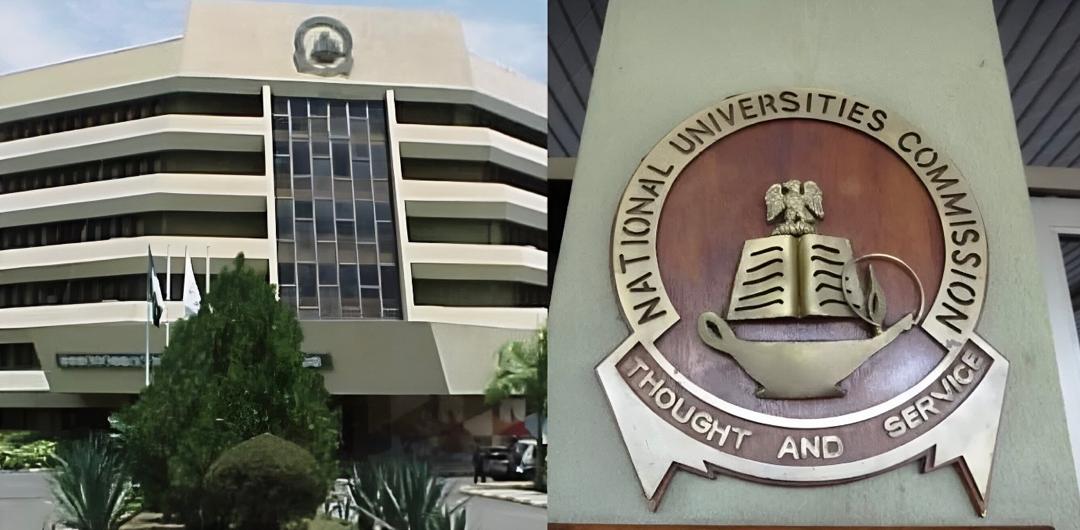
Abuja, Nigeria — There are growing indications that Tansian University, Umunya, may be at risk of losing its operational license as Nigeria’s university regulator, the National Universities Commission (NUC), is believed to be weighing decisive action over unresolved leadership and governance controversies at the institution.
In a letter from the NUC—confirmed by sources within the educational regulatory community—the Commission is also demanding the removal of Rev. Fr. Edwin Chukwujekwu Obiora, SAN, from his position as Chancellor, while insisting that the body currently identifying itself as the Board of Trustees of Tansian University, Umunya, Anambra State (Limited by Guarantee), was never formally licensed by the Commission to own or operate a university.
The move comes amid growing concerns about governance breakdowns, disputed ownership structures, and procedural irregularities that, according to the NUC, threaten the survival and reputation of one of Nigeria’s faith-based private universities, with the regulator warning that continued non-compliance could lead to the withdrawal of the university’s operational license.
Founded in 2007, Tansian University has operated for 17 years, producing a number of graduates who have gone on to contribute to various sectors of the economy. However, the NUC has now described the institution’s current trajectory as deeply troubling. While the university was originally licensed and owned by the Missionary Servants of the Church (MSC), the NUC stated that a newly formed entity, the Board of Trustees of Tansian University Umunya, Anambra State Limited by Guarantee, was never granted any license to operate a university. The Commission also emphasized that no formal notification of a change in ownership or university name had been submitted, raising serious questions about legal compliance.
“The University is owned by the Missionary Servants of the Church, a religious order of the Catholic Church in Nigeria. The provisional license was suspended in 2012 due to persistent non-performance and deviation from NUC regulatory provisions,” a source from the Commission said. At inception, Tansian University ran eleven programs across four faculties. Today, it reportedly operates 28 programs across five faculties. The NUC has called for clarity, questioning whether this growth accurately reflects the operational reality on the ground.
The Commission reminded stakeholders of its historical mandate and its critical role in shaping Nigerian higher education. Established in 1962, the NUC began as a small advisory unit at the Cabinet Office, overseeing a country that then had barely five universities. Today, Nigeria boasts 272 universities, and the Commission plays a central role in licensing, accrediting, and monitoring them, ensuring that institutions comply with minimum academic standards and governance requirements.
“The NUC does not just approve courses and programs. We monitor their growth, maturity, and accreditation. We license private universities, suspend licenses, and make recommendations to the government to determine functionality and viability,” a senior NUC official said during a meeting with university stakeholders. He emphasized that the University must maintain harmony and a functional ecosystem to sustain research, teaching, and community engagement. “If you don’t have peace within the University, you cannot extend it to the community. You cannot give what you do not have,” the official added.
The NUC highlighted the troubling governance and ownership disputes at Tansian University. Since the death of the founder, Monsignor Prof. John Bosco Akam, disagreements have erupted between the MSC and the Diocese of Ekwulobia, resulting in ongoing litigation. These disputes have paralyzed the Board of Trustees (BOT), leaving it largely non-functional. Only one original trustee, Dr. Peter Ejikeme, remains alive, while others have died. The newly constituted BOT, according to NUC reports, has been acting without legal authority, creating further instability.
Compounding the issue, Rev. Fr. Obiora, who served as the University’s legal adviser, was promoted to Chancellor and subsequently elevated to the rank of professor. The NUC questioned the legitimacy of this academic promotion, noting that the standard procedure for professorship in Nigeria requires rigorous assessment, including peer-reviewed publications, internal and external assessors’ evaluations, and formal Senate approval. Obiora’s elevation, critics argue, bypassed these processes and undermined academic integrity.
The Commission further pointed to multiple operational irregularities, including the micro-management of university affairs by the BOT and its interference with management functions. Accounts revealed that university revenues were reportedly deposited into church accounts over which the Vice Chancellor and Bursar had no signatory rights, limiting operational autonomy. Additionally, the Tansian University Law of 2022 introduced substantial alterations to the governance framework without prior NUC approval, including the registration of a company called Tansian University Limited with the Corporate Affairs Commission. The NUC has stated there is no evidence that these changes were reported to or approved by the regulator.
Other internal conflicts include frequent changes in the Pro-Chancellor position, irregular meetings of the governing council, and alleged favoritism in administrative appointments. The result, according to NUC officials, is a University struggling with internal disharmony, operational inefficiency, and a reputation that could be severely compromised if the current trajectory continues.
The NUC warned that the survival and reputation of Tansian University hinge on immediate compliance with regulatory directives. The Commission framed the issue within the broader context of global higher education standards, urging university stakeholders to consider whether Tansian University aims to compete with world-class institutions like Harvard, MIT, Oxford, and Edinburgh, or risk sliding into obscurity.
“The University enterprise is central to opportunity — it changes communities. Umunya itself has been transformed by this institution. A University must outlive its founders; it cannot be set up today and destroyed tomorrow,” the Commission said. Citing examples of universities such as Harvard, which began with eight students in 1639 and now spans multiple countries, the NUC emphasized the importance of long-term vision, governance, and stewardship.
Petitions against the University, including complaints from lawyers and concerned citizens, underscore the seriousness of the situation. Issues cited range from governance disputes, salary arrears, and land conflicts to the irregular constitution of the Board of Trustees and micro-management by proprietors. A committee sent by the NUC confirmed that these governance gaps are real and urgently need rectification.
The Commission concluded that it would hold Tansian University’s leadership accountable while offering support for reform and stabilization. The message was clear: failure to resolve these disputes and comply with NUC directives could result in sanctions, including suspension or revocation of the University’s license to operate.