
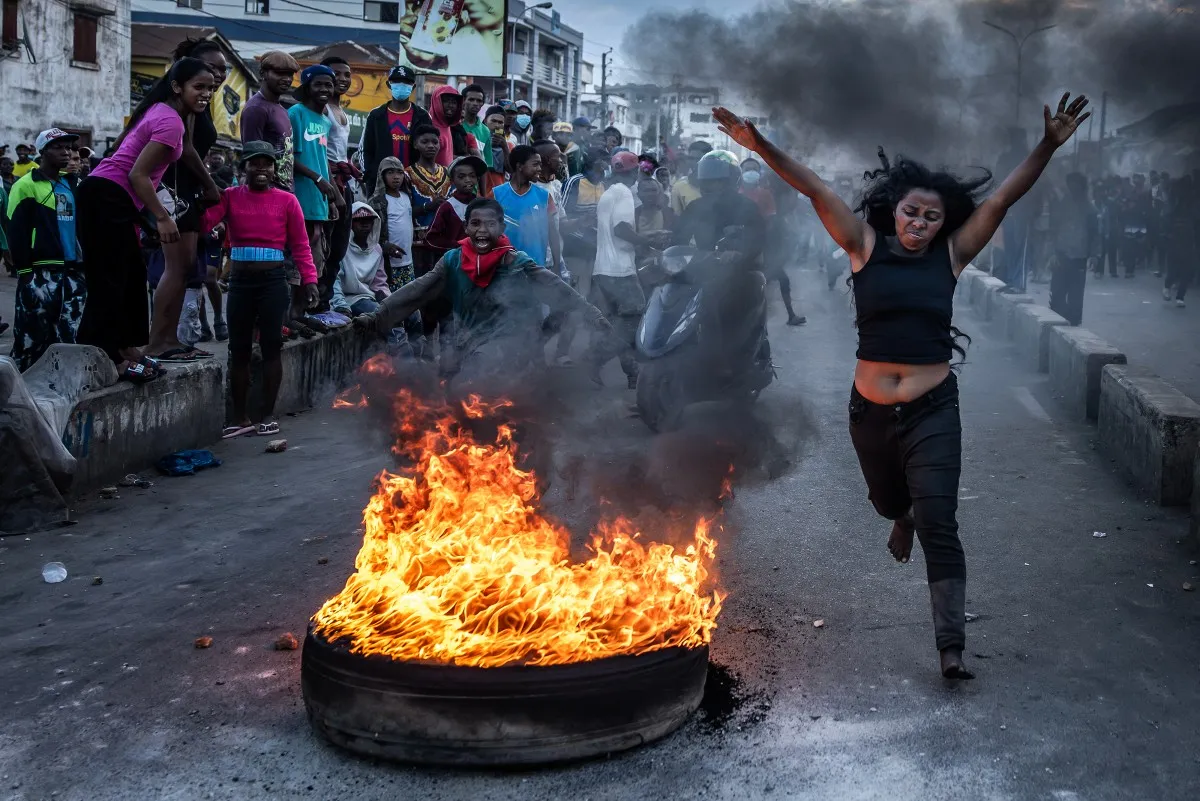
Thousands of antigovernment protesters have flooded the streets of Antananarivo, Madagascar’s capital, in a wave of demonstrations that have rapidly escalated into violent clashes with security forces. Reports confirm that several protesters have sustained injuries, highlighting the volatility and deep frustration within the island nation. What at first seemed a spontaneous uprising has revealed itself as the manifestation of long-standing grievances. Central to this upheaval is widespread and deeply entrenched government corruption, which many Malagasy citizens blame for their deteriorating economic conditions and political marginalization.

The protests began as a reaction to the soaring cost of basic necessities, with the price of rice, fuel, and transportation rising sharply. Inflation has spiralled out of control, hitting essential goods and services particularly hard, and disproportionately affecting the poorest Malagasy. As one of the world’s poorest countries, Madagascar’s population is already vulnerable, and these economic pressures have compounded everyday hardships.
The government’s decision to increase fuel prices to cope with global energy market fluctuations became a critical spark. Public transportation fares, which most workers depend on, rose accordingly. For many, this was the final straw after months of silent suffering. The frustration quickly spilled onto the streets, where citizens demanded relief and accountability.

Adding to this volatile mix is the increasing repression of dissent. Opposition leaders, activists, and journalists have reported intimidation tactics, arbitrary arrests, and censorship, creating an atmosphere of fear. Many citizens view this as evidence of a government unwilling to listen or share power, further galvanizing demands for democratic reforms and transparency.
Understanding why Madagascar has reached this crisis requires examining the deep-seated issues that have long hindered its development. Despite abundant natural wealth—including unique biodiversity, minerals, and fertile lands—Madagascar remains one of the world’s poorest nations. More than three-quarters of its population live below the international poverty line, a testament to decades of systemic failures.
Economic inequality is stark. While a small urban elite enjoys relative prosperity, the majority live in rural areas with little access to basic services. The benefits of economic growth rarely reach the majority, who remain marginalized. This disparity fosters resentment and a sense of abandonment among the Malagasy people.

Corruption is embedded in many aspects of governance, from the allocation of contracts and public procurement to the judiciary and police forces. Transparency International consistently ranks Madagascar poorly on corruption indices, reflecting a culture in which public officials exploit their positions for personal gain. This corruption drains resources needed for infrastructure, health, and education, deepening poverty.
Environmental degradation further complicates Madagascar’s challenges. The country’s agricultural sector, which employs the majority of the population, has been hard hit by deforestation, soil erosion, and climate change effects such as severe droughts and cyclones. These environmental pressures reduce productivity, contribute to food insecurity, and increase economic vulnerability.
Demographically, Madagascar is a youthful nation, with a median age of just 20. This presents both an opportunity and a challenge. While a young population could drive growth and innovation, high unemployment and a lack of educational and vocational opportunities have left many feeling hopeless. This sense of alienation among youth is a potent force driving political unrest.
Voices from the streets underscore the depth of frustration. Rasoa, a 27-year-old university graduate who joined the protests, explained, “We studied hard to build a better future, but all we see is worsening poverty and no jobs. Prices rise every week, and the government is silent or corrupt. We cannot live like this anymore.”
Political analyst Dr. Hery Rakoto offered a broader perspective: “These protests are not just about economic hardship. They reflect a fundamental crisis of governance. The government has failed to address corruption, has sidelined opposition voices, and failed to deliver basic services. This is a call for change that can no longer be ignored.”
The government has responded to the protests with a combination of hardline tactics and public assurances. President Rajoelina condemned the violence and called for calm, emphasizing the importance of law and order. Security forces have used tear gas and arrested protest leaders, a move criticized by human rights organizations as excessive and counterproductive.


Looking forward, Madagascar faces a critical crossroads. The path to stability lies in tackling the deep-rooted causes of unrest. This requires genuine political will to combat corruption and promote transparency. Institutional reforms are essential to strengthen the judiciary, law enforcement, and public administration.
Economic relief measures, including subsidies or price controls on essential goods and improved social safety nets, could provide immediate respite to struggling populations. Long-term development efforts should focus on inclusive growth, improved education, and sustainable agriculture, while mitigating environmental risks.
Crucially, the government must open channels for inclusive dialogue with opposition groups, civil society, and grassroots movements. Building trust and political consensus is vital to prevent further polarization and violence.
Madagascar’s antigovernment protests are far more than spontaneous outbursts against rising prices. They are the visible expression of deep socio-political malaise rooted in decades of corruption, inequality, and governance failure. The nation’s future depends on bold leadership capable of addressing these challenges with urgency and empathy.