
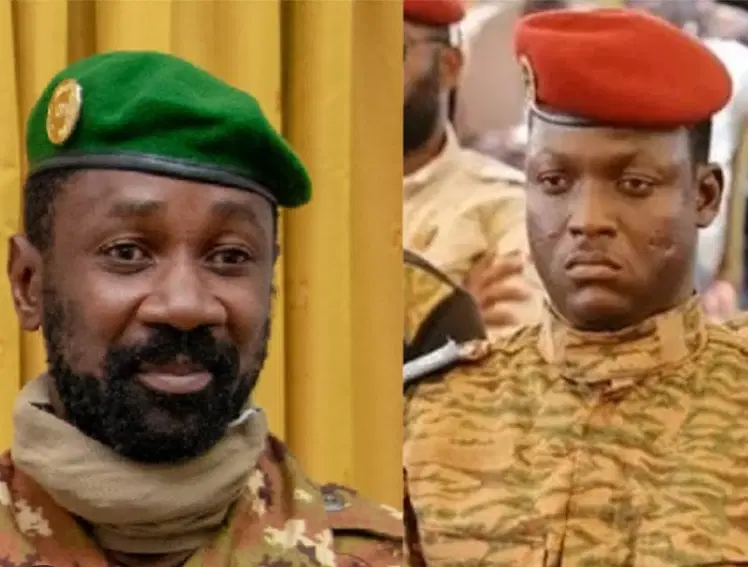
Mali and Burkina Faso will impose a travel ban on Americans in response to President Trump’s announcement this month that citizens of the two West African countries would be barred from entering the United States from Jan. 1.
Both governments said in separate statements on Tuesday that they were acting “in accordance with the principle of reciprocity,” and would apply the same restrictions on Americans that were imposed on their countries. The travel bans would take effect immediately, they added, and the decision was announced after Niger made a similar decision last week.
The Trump administration first imposed a travel ban on 12 countries in June. After an Afghan national was arrested in the shooting of two National Guard troops in Washington over the Thanksgiving weekend, Mr. Trump vowed to extend the restrictions to more countries. This month, he expanded the ban to 19 countries, including Niger, Mali and Burkina Faso, taking the total number of affected African states to 12.
The United States has travel advisories in place for all three countries and has told its citizens not to visit any of them because of the threat of terrorism, crime and kidnapping.
The Sahel region, especially Niger, Mali and Burkina Faso, account for more than half the world’s terrorism-related deaths, according to the United Nations.
Mali’s foreign ministry said it rejected the Trump administration’s argument that the visa ban was put in place because of security concerns and said the United States had made its decision without consulting Mali.
Mali imposed a separate reciprocal visa restriction on U.S. citizens in October, when the country announced a $5,000 to $10,000 bond on American business and tourist travelers in response to a similar U.S. program that affected 11 African nations. The U.S. removed Mali from the list of affected countries weeks later.
Several African countries that have adopted a more conciliatory approach and conceded to the demands to accept deportees from the United States have received exemptions from such travel restrictions. Weeks after Liberia agreed to receive Kilmar Armando Abrego Garcia, a Salvadoran migrant who was wrongly deported to El Salvador in March, the Trump administration extended visas for Liberians visiting the United States to 36 months from 12 months.
Niger, Mali and Burkina Faso are run by military juntas after coups in recent years. The military leaders of the countries had all largely severed ties with Washington and developed closer relations with Russia and China, as well as Turkey and the United Arab Emirates. They have also left the Economic Community of West African States, a regional alliance, and formed their own bloc.
“While this is likely to further constrain relations, it will also displace Washington’s influence” in the Sahel, said Beverly Ochieng, an analyst at Control Risk, a risk management group, referring to the visa bans.
Since Mr. Trump was re-elected, he has sought to reshape American relations with Africa. While there have been pockets of continued engagement, such as efforts to end the war in the Democratic Republic of Congo, analysts said the president has leaned heavily toward withdrawing from the continent.
Mr. Trump’s decision to slash foreign aid was deeply felt in Africa, which was the biggest recipient of U.S. assistance. A large number of the U.S. diplomats who were withdrawn from service this month were posted in Africa.
It was not immediately clear how many Americans travel regularly to Niger, Mali and Burkina Faso, but the U.S. sent an envoy to Mali in July to discuss strengthening security and economic ties. Some observers have warned that the visa restrictions will ultimately undercut those efforts while benefiting Russia and China.
With the bans in place, rivals in the Sahel will “position themselves in a way that will likely grant them favorable access in strategic areas, including defense, mining and energy,” Ms. Ochieng said.