
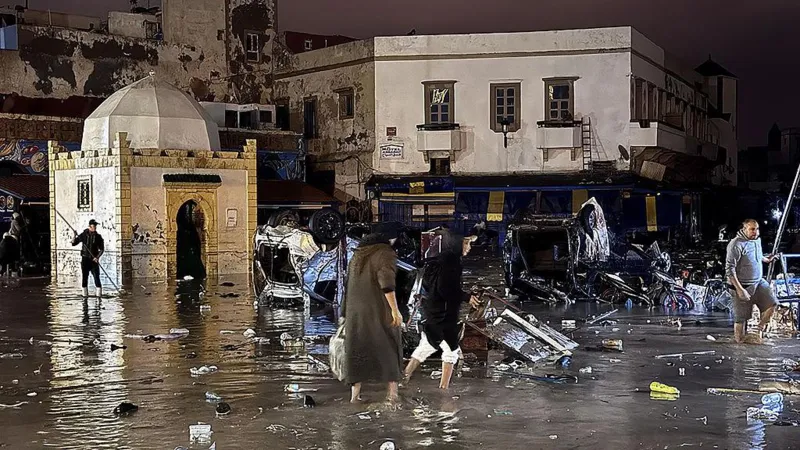
Northern Morocco remains in the grip of severe flooding after days of torrential rain forced authorities to evacuate more than 140,000 people, as emergency services race to contain rising water levels and prevent further damage.
Several provinces in the north of the country were placed under weather alert warnings after intense downpours flooded towns, farmland and major transport routes. The evacuations, described by officials as largely precautionary, have been carried out across low-lying areas considered at high risk of river overflow.
In Ksar El-Kébir, one of the worst-affected cities, water levels rose so rapidly that some residents were forced to seek refuge on rooftops. Emergency teams carried out dramatic rescues as floodwaters submerged streets and entered homes, catching families off guard despite earlier warnings.
The flooding has been exacerbated by the sharp rise in water levels at the Wadi Al-Makhazin dam, a key reservoir fed by the Loukkos River basin. Authorities said the increase was caused by exceptionally strong inflows following sustained rainfall across the catchment area. Engineers have been managing controlled water releases to reduce pressure on the structure, while warning that downstream communities remain vulnerable to further flooding.
Local officials said the situation was being closely monitored, with dam operations adjusted continuously to balance safety concerns against the risk of worsening floods downstream. Residents in nearby areas have been urged to remain alert and follow instructions from civil protection services.
Emergency response teams, including civil defence units and the armed forces, have launched aerial operations to reach isolated communities cut off by floodwaters. Helicopters have been used to deliver food, drinking water and medical supplies, while assessment teams work on the ground to evaluate damage to infrastructure, housing and agricultural land.
Temporary shelters have been set up for displaced families, many of whom remain without electricity or clean water. Authorities say restoring essential services is a priority but warn that continued rainfall could delay recovery efforts.
Meteorologists have forecast further heavy rain in parts of northern Morocco, increasing concerns about additional river swelling and possible landslides in mountainous areas. Officials have stressed that the scale of evacuations reflects a determination to avoid loss of life after previous flood disasters in the country.
While no fatalities have been officially confirmed in the current flooding, the crisis comes amid growing anxiety over Morocco’s vulnerability to extreme weather. Climate experts have repeatedly warned that more intense and erratic rainfall events are becoming increasingly common across North Africa, putting pressure on ageing infrastructure and water management systems.
For many residents, the floods have brought renewed uncertainty as they wait to learn when — or if — they can safely return home. With rivers still running high and more rain expected, authorities say the emergency phase is far from over.