
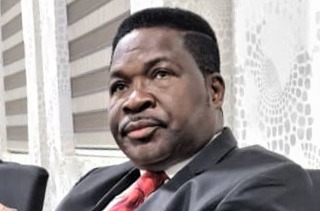
The Nigerian government has filed criminal charges against Mike Ozekhome, one of the country’s most famous lawyers, over a long-running dispute about a house in north-west London.
Ozekhome, a Senior Advocate of Nigeria (SAN) – the highest rank for lawyers in Nigeria – is accused of forgery and using false documents. The federal government says he broke the law by giving false information, making and using forged documents, and trying to deceive a public authority.
The case, marked FCT/HC/CR/010/2026, was filed on Friday in the Federal High Court in Abuja by prosecutors acting for the attorney general of the federation.
The charges relate to proceedings before the UK First-tier Tribunal (Property Chamber), where Ozekhome tried to claim ownership of a house at 79 Randall Avenue, London NW2 7SX. Nigerian authorities say he knowingly used false documents, including a Nigerian passport in the name Shani Tali, a person that UK judges later said did not exist.
The alleged offences are said to have taken place in August 2021, partly in Abuja and partly in London, but Nigerian prosecutors argue the Federal Capital Territory High Court has jurisdiction over the matter.
The Charges
The three-count charge sheet lists the offences as follows:
Count One: Ozekhome is accused of receiving the London property as a supposed gift from a man called Mr Shani Tali, knowing that the transaction was illegal under Nigeria’s anti-corruption laws. This, the prosecutors say, breaks section 13 of the Corrupt Practices and Other Related Offences Act 2000, punishable under section 24.
Count Two: While acting as a legal practitioner, Ozekhome is accused of making a false document – a Nigerian passport with the name Shani Tali – to support his claim of ownership over the London property. This is said to violate section 363 of the Penal Code CAP 532, punishable under section 364.
Count Three: He is accused of using the false passport as if it were real, knowing that it was fake, to support his claim to the property. This allegedly breaks section 366 of the Penal Code, also punishable under section 364.
If proven, these charges could carry serious penalties under Nigeria’s anti-corruption and criminal laws.
The government says it will call several witnesses, including investigators and a representative from the Nigerian Immigration Service (NIS). Documents to be submitted as evidence include the UK tribunal judgment, letters from authorities, statements from witnesses, and passport records linked to Shani Tali. No trial date has been set yet.
Ozekhome has not publicly responded to the charges. Under Nigerian law, he is presumed innocent until proven guilty.
The London Property Dispute
The criminal case follows a UK tribunal ruling in September 2025, which resolved a long dispute over the Randall Avenue house.
The house, located in Brent, north-west London, was bought in 1993 and registered under the name “Tali Shani.” For many years, it was unclear who Tali Shani really was, or if the name was hiding the true owner.
The case came before the UK First-tier Tribunal, case number REF/2023/0155, with Ms Tali Shani as the applicant and Ozekhome as the respondent.
Ozekhome told the tribunal he received the property as a gift from Mr Tali Shani in 2021. Lawyers for Ms Shani said she was the rightful owner. A witness claiming to be Mr Tali Shani said he had powers of attorney over the property and had transferred it to Ozekhome.
But the tribunal, led by Judge Ewan Paton, found that neither Mr nor Ms Tali Shani were real people. Instead, the tribunal said the property was originally bought in 1993 by General Jeremiah Timbut Useni, a former Nigerian military officer, senator, and minister who died in January 2025.
Judge Paton said Useni had used the false name “Tali Shani” to hide assets abroad, including the London property. Evidence from court cases in Jersey, and testimony Useni gave in June 2024 before his death, confirmed he was the real owner.
“The real owner, via a false name, was General Jeremiah Useni,” the tribunal said, rejecting Ozekhome’s claim and dismissing the claims of the Shani claimants.
Forged Documents and False Evidence
The tribunal said many documents in the case were fake or misleading. These included identity documents, witness statements, medical letters from a Lagos hospital, a death certificate, and even a funeral notice.
Investigations by the Nigeria Police Force found that some documents submitted by the Shani claimants were false. For example, a mobile phone bill used as proof came from a Lagos lawyer, not a real person.
The tribunal did not identify exactly who made all the forged documents. But it concluded that both sides failed to prove ownership through the Shani identity. The house therefore remained part of General Useni’s estate.
Reaction in Nigeria
The UK judgment caused shock in Nigeria’s legal and political circles. Ozekhome is a top lawyer, and Useni was a senior political figure.
In October 2025, Nigeria’s attorney general and minister of justice, Lateef Fagbemi, expressed concern over growing complaints against senior lawyers. He pointed to the London property case as an example of possible misconduct.
Fagbemi said his office had received many petitions against senior lawyers and confirmed the tribunal’s findings were being checked. He called for the Nigerian Bar Association and the Body of Senior Advocates of Nigeria to cooperate.
The criminal charges against Ozekhome are seen as the first major step in this investigation.
International Implications
The case highlights the global nature of property disputes involving powerful officials and well-known professionals. Nigerian authorities appear willing to pursue cases involving overseas property.
For the UK, the case raises questions about London’s property market and how foreign wealth can be hidden under false names. Even though the tribunal identified the real owner, it shows how difficult it can be to trace property ownership decades later.
Legal experts say prosecuting a SAN is rare in Nigeria and will test the independence of the courts. Much will depend on whether prosecutors can prove that Ozekhome knowingly used false documents, rather than relying on others.
Officials from the Nigerian Immigration Service are expected to play a key role, as passport and identity records are central to the case.
For now, the case is in its early stages. The Abuja High Court has not set a trial date, and Ozekhome can still challenge the charges or the court’s authority.
The dispute over a single house in north-west London has therefore become a high-profile test of legal accountability in both Nigeria and the UK.