
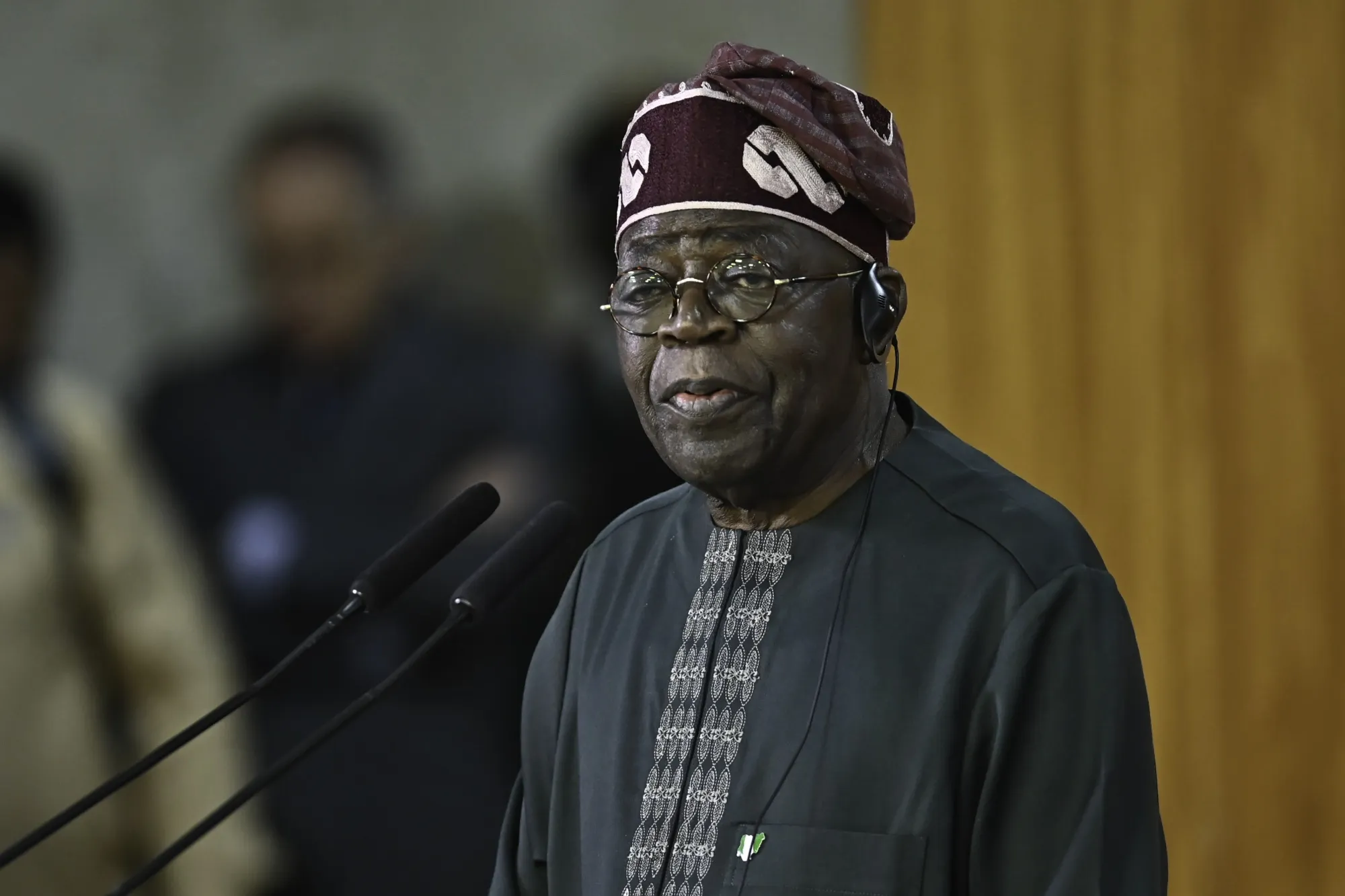
Nigeria’s security services have uncovered what officials describe as one of the gravest threats to the country’s democracy since the return to civilian rule in 1999: an alleged plot by serving and retired military officers to overthrow President Bola Tinubu’s government and assassinate senior political leaders.
The plan, which was quietly dismantled in late September 2025, was exposed through a covert intelligence operation coordinated by Army Headquarters and the State Security Service (SSS). Multiple senior administration insiders say the plot went far beyond internal military discontent, involving preparations for targeted killings, the seizure of key state institutions and the installation of a military government.
According to officials briefed on the investigation, the conspiracy began to unravel after an unnamed serving military officer with direct knowledge of the plot contacted the then chief of army staff, Olufemi Oluyede. The officer reportedly disclosed the scheme, explaining that he feared being implicated as an accessory to treason if he failed to alert the authorities.
At around the same time, the SSS independently gathered intelligence suggesting that some serving army officers were plotting to “destabilise the government and undermine Nigeria’s democracy”. An official familiar with the matter said the director general of the SSS, Oluwatosin Ajayi, personally briefed Oluyede on the findings.
Faced with converging intelligence from two separate channels, the heads of the army and domestic intelligence agreed that swift action was required. A wide-ranging but discreet joint operation was launched, with coordinated arrests planned across several parts of the country to neutralise what officials described as the plot’s core organisers and collaborators.
Arrests as the president travelled
On 30 September 2025, as Tinubu travelled to Imo state for an official visit, unaware of the alleged plan to depose and possibly assassinate him, the joint operation went into effect. Security agents moved simultaneously in different locations, arresting the alleged principal architects of the plot alongside other military and civilian suspects.
The chief of defence intelligence (CDI), Emmanuel Undiandeye, and the then chief of defence staff (CDS), Gen Christopher Musa, were subsequently briefed. According to officials familiar with the process, Undiandeye was requested to detain the suspects in an underground holding facility operated by the Defence Intelligence Agency.
Following the initial arrests, Tinubu was formally informed of the foiled plot. Sources said the president was visibly shaken by the scale and seriousness of the alleged conspiracy. He immediately ordered the cancellation of the 1 October national independence day parade, citing security concerns, and approved the constitution of a special investigative panel to examine the allegations in detail.
The panel was led by Undiandeye and granted broad powers to interrogate suspects, review classified intelligence and recommend further action. Its work later led to additional arrests.
One of the detained soldiers subsequently escaped from custody but was rearrested by SSS operatives in Bauchi, according to a military insider. Meanwhile, a retired officer identified as Gen Adamu and a former governor, Timipre Sylva, accused of bankrolling the plotters, remained at large at the time.
A quiet reshaping of the security leadership
In the weeks that followed, Tinubu took sweeping decisions that reshaped Nigeria’s security leadership. He dismissed and retired the then CDS, Gen Musa, as well as the chiefs of the navy and air force. Oluyede was appointed chief of defence staff and promoted to the rank of general.
Weeks later, Musa returned to government as minister of defence, a move that surprised some observers but was defended by officials as necessary to maintain stability and continuity within the security sector.
Initially, however, the military sought to play down the significance of the arrests. In a statement issued on 4 October, Defence Headquarters said the detained officers were being investigated for “indiscipline and breach of service regulations”. It added that preliminary findings suggested their grievances were linked to “career stagnation and failure in promotion examinations”.
Despite mounting evidence reported by Nigerian media outlets, the military repeatedly denied that a coup plot existed. In a further statement on 18 October, Defence Headquarters described the probe involving 16 arrested officers as a routine internal investigation aimed at maintaining discipline and professionalism within the armed forces.
Admission after months of denial
That position shifted dramatically on 26 January, when the military publicly acknowledged for the first time that officers had indeed plotted to illegally overthrow Tinubu’s administration.
In a statement, Defence Headquarters said the investigation had been completed and forwarded to “appropriate superior authority in line with extant regulations”. It described the probe as “comprehensive” and said it examined “all circumstances surrounding the conduct of the affected personnel”.
The findings, the statement said, revealed “a number of officers with allegations of ‘plotting to overthrow the government’”, conduct described as “inconsistent with the ethics, values and professional standards required of members of the Armed Forces of Nigeria”.
“Accordingly, those with cases to answer will be formally arraigned before an appropriate military judicial panel to face trial in accordance with the Armed Forces Act and other applicable service regulations,” the statement added.
Alleged assassination plans
Details emerging from the investigation suggest the alleged conspiracy was far more violent than earlier official statements implied.
In an earlier report, sources with direct knowledge of the investigation identified top political figures allegedly marked for assassination. They include Tinubu, Vice President Kashim Shettima, Senate President Godswill Akpabio and Speaker of the House of Representatives Tajudeen Abbas.
“There are other people targeted,” one source said. “But those are the key targets.”
According to the same sources, the plotters also planned to detain senior military officers, including the service chiefs. “They did not want to kill them,” the source added.
Officials said the conspirators intended to assassinate the political leaders simultaneously. “They were waiting for a day when all of them would be in the country,” one official said. “Wherever they were, they would be assassinated.”
The sources alleged that the plot relied heavily on insider information. “They have people inside the Villa who monitor the movements of these officials,” one source said. “The plan was to kill them at the same time and install a military government.”
A fragile democratic legacy
Nigeria has experienced a series of military coups since independence, with long periods of authoritarian rule shaping its political institutions and civil-military relations. Although the country returned to democratic governance in 1999, fears of military intervention have never fully disappeared, particularly during moments of political transition.
Analysts say the alleged plot underscores persistent tensions within the armed forces, including grievances over promotions, postings and perceived political interference. It also highlights the vulnerabilities of democratic institutions in a country grappling with economic hardship, insecurity and public distrust of political elites.
For Tinubu, who took office promising reform and stability, the revelations represent a profound challenge. The president has sought to project confidence in the armed forces while backing a process that could see senior officers prosecuted before a military tribunal.
Human rights advocates have called for transparency, warning that closed military trials risk undermining public confidence. Others argue that secrecy is unavoidable in cases involving national security.
The image of an elected president allegedly marked for assassination by members of his own armed forces has revived memories of a darker era and raised urgent questions about loyalty, accountability and the future of civilian rule in Africa’s largest democracy.