

Stakeholders in Nigeria’s oil-producing Delta State have called on international oil companies to comply fully with the Petroleum Industry Act (PIA), amid growing concern that host communities are not receiving the benefits promised under the law.
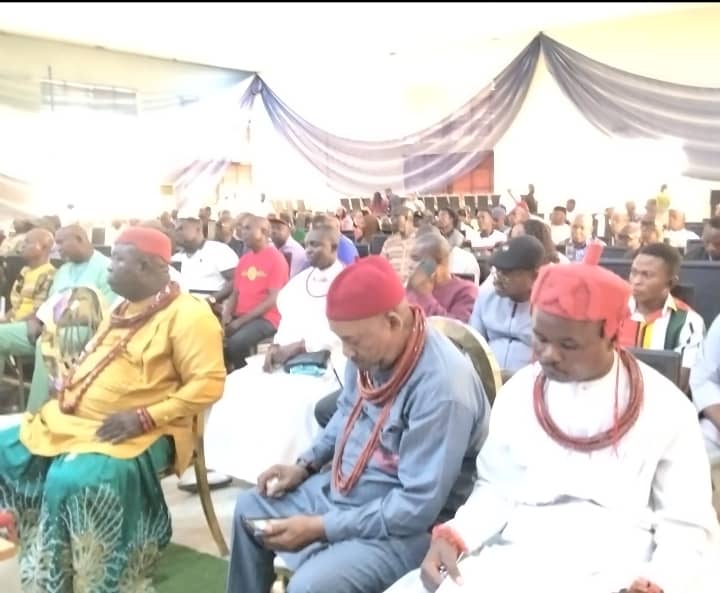
The call was made at a one-day Delta State stakeholders and petroleum communities sensitisation workshop held at the Government House Annex in Warri. The event brought together community leaders, regulators, traditional rulers and civil society groups to discuss the implementation of Chapter Three of the PIA, which deals with host community development.
Participants urged oil companies, known under the law as “settlors”, to complete community needs assessments, establish host community development trusts (HCDTs) and release funding in line with the Act. Under the PIA, operating companies are required to contribute three per cent of their annual operating expenditure (OPEX) to fund development projects in host communities.

In a keynote address, the chairman and chief executive of Mecco and Marine Holdings Limited, Chief George Bucknor Jr, said full compliance with the PIA was essential if the law was to deliver meaningful change in oil-producing areas.
Bucknor said settlors must ensure the timely establishment of HCDTs and the early release of the three per cent OPEX required to fund community development plans. He warned that delays or partial compliance risked undermining trust between communities, companies and regulators.
The workshop, organised in collaboration with the Delta State government and the Nigerian Upstream Petroleum Regulatory Commission (NUPRC), was designed to educate host communities on the provisions of the PIA, particularly those relating to governance, accountability and participation.
Bucknor said the event aimed to clarify the role of oil companies in setting up HCDTs, explain the structure and responsibilities of boards of trustees, and outline the functions of the various organs of the trusts. He said communities needed a clear understanding of how the trusts were meant to operate, who was responsible for what, and how funds should be managed.
He stressed that the PIA was designed to give host communities direct social and economic benefits, not to impose new taxes. According to Bucknor, there remained widespread misunderstanding about the three per cent OPEX contribution, with some believing it was a government levy rather than a community fund.


He pointed to Section 257 of the PIA, which allows deductions from the host community fund where damage is caused to oil and gas facilities within a community. Bucknor questioned the fairness of this provision, noting that surveillance and security contracts were often not awarded to host communities, yet they were penalised when facilities were damaged.
The NUPRC’s regional coordinator for Warri, Ambassador Ogunnubi Benjamin, said the sensitisation programme was timely and necessary. Speaking through his representative, engineer Okundia Kingsley, Ogunnubi said the Act could only work if all parties understood its provisions.
He assured participants that the commission would carry out its oversight role in line with the law, with the aim of promoting sustainable development and ensuring that host communities received direct benefits from oil and gas operations.
“Our responsibility is to ensure that the PIA is established, implemented and administered as intended,” he said, adding that the commission remained committed to fairness, transparency and long-term prosperity in oil-producing areas.
Traditional rulers used the occasion to express both support for the goals of the PIA and frustration with its implementation. The Pere of Akugbene-Mein Kingdom and first vice-chairman of the Delta State Traditional Rulers’ Council, Pete S.P. Like Kalanama III, said host communities were already familiar with the Act and had long worked to protect oil infrastructure.


He said communities had enforced zero tolerance for pipeline vandalism even before the PIA came into force. However, he argued that the three per cent OPEX allocation was far below what communities needed, given the scale of environmental damage and economic disruption caused by oil production.
The monarch also called on oil companies to strengthen their corporate social responsibility programmes, saying communities deserved greater value from the natural resources taken from their land.
Similar concerns were raised by the Ovie of Ozoro Kingdom, Anthony Ogbogbo Ibuka I, who served as father of the day. While commending the organisers, he said the PIA failed to recognise the role of traditional rulers as custodians of peace and security in their communities.
He criticised the three per cent OPEX provision, describing it as inadequate and disrespectful to host communities that had borne the cost of oil extraction for decades.
Concerns were also raised about the level of engagement by oil companies and regulators. Bashorun Askia Ogeah, a former chairman of the Delta State Oil Producing Areas Development Commission and chair of the board of trustees of OML 28, said the absence of many settlors at the workshop was troubling.
He said oil companies had been invited but failed to attend, while representation from the regulator was limited. He warned that meaningful progress would remain difficult unless all critical stakeholders were present and actively involved.
Community leaders also spoke about gaps in communication between operators and host communities. Amechi Asugwuni, chair of the Ndokwa HCDT of Oando and president-general of the Ndokwa Neku Union, said communities often lacked information about how the PIA was being implemented.


He said poor feedback mechanisms had created suspicion and frustration, adding that communities needed regular updates and clearer explanations from operators.
The Delta State commissioner for oil and gas, Peter Uviejitobor, said the workshop reflected the need for cooperation and compliance under the PIA. Represented by Emmanuel Ofomiyuaju, director of local content, the commissioner said dialogue was essential to peace and sustainable development.
He expressed hope that the discussions would promote transparency, improve relations between companies and communities, and support long-term prosperity across Delta State.
Representatives from Itsekiri, Ijaw, Ndokwa, Isoko, Urhobo and Ukwuani petroleum communities attended the workshop. While views differed on the adequacy of the PIA, there was broad agreement that better implementation, stronger oversight and deeper engagement were needed if the law was to meet its stated aims.