
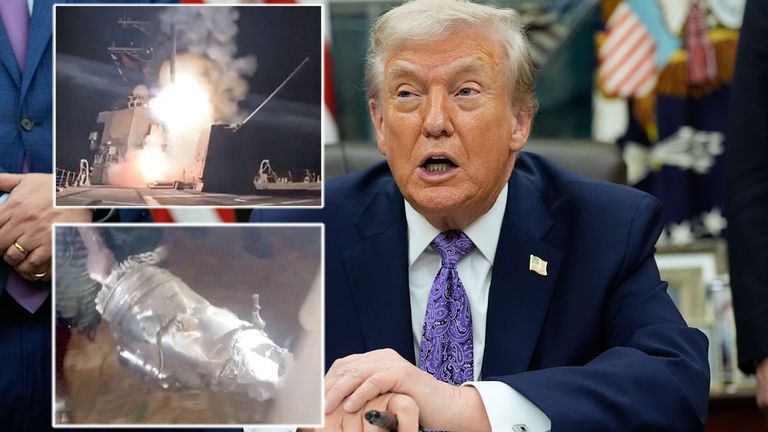
New details are emerging in the wake of U.S. military airstrikes against Islamic State–linked militants in northwest Nigeria, raising serious questions about casualty figures, operational effectiveness and the growing scope of American counterterrorism operations in West Africa.
According to official statements from the U.S. Department of Defense and Nigerian authorities, the strikes, carried out on Christmas Day, resulted in the deaths of “multiple” terrorists affiliated with the Islamic State. While the Pentagon has stopped short of releasing a precise number, U.S. officials insist the operation successfully degraded militant capabilities in a region increasingly threatened by extremist violence.
The airstrikes targeted suspected terrorist camps hidden deep inside forested areas of Sokoto State near Nigeria’s border with Niger. Conducted overnight, the operation was described by U.S. Africa Command as a precision mission requested and approved by the Nigerian government. Advanced intelligence, surveillance and reconnaissance assets were reportedly used to identify targets before GPS-guided munitions were deployed.
Pentagon officials said the strikes were designed to avoid civilian casualties and emphasized that no credible reports of noncombatant deaths have been received. The Defense Department characterized the mission as part of a broader effort to prevent Islamic State affiliates from establishing a permanent foothold in Nigeria’s northwest, a region traditionally plagued by criminal banditry but now facing a growing extremist presence.
Despite the Pentagon’s confidence, Nigerian local officials on the ground have urged caution, saying damage assessments are still underway. Authorities in affected communities said they could not immediately verify the number of militants killed, citing the remoteness of the strike locations and ongoing security concerns. Residents reported loud explosions and a red glow lighting up the night sky, but some said they did not observe militant bodies afterward.
The lack of a confirmed body count has fueled debate over the operation’s impact. Security analysts note that militant groups often operate in small, mobile units, making casualty verification difficult even after successful strikes. U.S. officials maintain that intelligence gathered after the operation supports their conclusion that multiple high-value targets were neutralized.
President Donald Trump publicly praised the strikes, calling them decisive action against Islamic State terrorists and framing the mission as part of a broader commitment to protect vulnerable communities targeted by extremist violence. Trump described the operation as a warning to jihadist groups operating in Africa that the United States would not hesitate to act when its interests and humanitarian concerns align.
The president’s comments drew mixed reactions in Nigeria, where government officials stressed that the mission was conducted with full respect for Nigerian sovereignty. Nigerian leaders emphasized that the country faces a complex security landscape involving insurgents, criminal gangs and transnational extremists, and that international partnerships remain essential in addressing these threats.
Military experts say the strikes represent one of the most significant direct U.S. military actions inside Nigeria in recent years. While the United States has long supported Nigeria through intelligence sharing, training and logistics, direct kinetic operations have been rare. The Christmas Day mission signals a shift toward more assertive engagement as extremist groups adapt and expand beyond traditional conflict zones.
The northwest region has seen rising instability as armed groups exploit vast forests, porous borders and limited state presence. Intelligence assessments suggest Islamic State–aligned factions have sought to embed themselves among local bandit networks, blurring the lines between ideological terrorism and profit-driven violence. U.S. officials argue that disrupting these networks early is critical to preventing the type of entrenched insurgency that devastated northeastern Nigeria for more than a decade.
Critics, however, warn that airstrikes alone cannot solve Nigeria’s security challenges. Some analysts caution that without sustained ground operations, improved governance and economic development, militant groups may simply regroup or relocate. Others question whether intelligence overstated the scale of the extremist threat in the targeted areas, pointing to villagers who say their communities had not previously experienced jihadist activity.
The Pentagon has defended its intelligence assessments, stating that the targeted camps were linked to known extremist operatives responsible for planning attacks and recruiting fighters. U.S. officials said follow-up monitoring is ongoing and that additional operations remain possible if threats persist.
For residents of Sokoto State, the sudden appearance of U.S. military power was both startling and unsettling. While some welcomed the intervention as a sign that powerful allies are taking Nigeria’s security crisis seriously, others expressed fear that their communities could become targets in a widening conflict.
The Nigerian military has since increased patrols in the area, and government officials have indicated that cooperation with international partners will continue. Security sources say the strikes sent a strong message to militant groups operating along Nigeria’s northern frontier, signaling that remote terrain will no longer guarantee safety from precision attacks.
As of now, the exact number of terrorists killed remains undisclosed. The Pentagon continues to describe the outcome in general terms, saying multiple fighters were eliminated and terrorist infrastructure was destroyed. Nigerian authorities have echoed that assessment while acknowledging the challenges of independent verification.
What remains undeniable is the strategic significance of the operation. The U.S. airstrikes mark a clear escalation in America’s role in Nigeria’s fight against extremism and highlight growing concerns that West Africa could become the next major front in the global battle against Islamic State networks.