
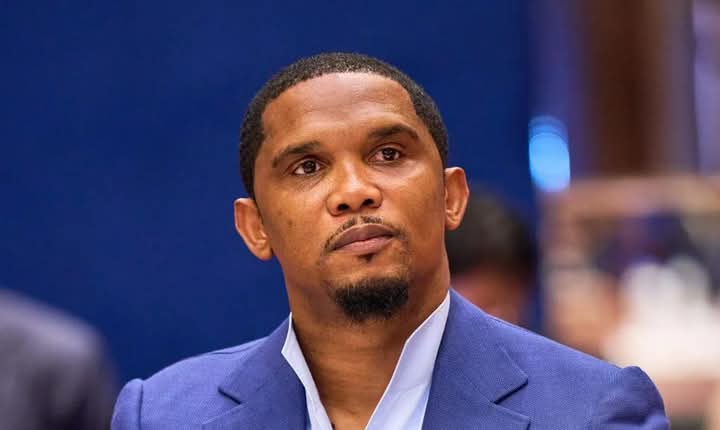
Samuel Eto’o has been re-elected president of the Cameroonian Football Federation (FECAFOOT), securing a second four-year term after a vote held at the federation’s General Assembly in Mbankomo on Saturday. Eto’o, who ran unopposed, won by an overwhelming margin, receiving 85 votes out of 87 cast, with two ballots declared invalid. The re-election solidifies his leadership at a time when Cameroonian football continues to face administrative tensions and mixed on-field results.
The vote proceeded despite friction between FECAFOOT and the Ministry of Sports, which had earlier raised objections over aspects of the electoral process, citing alleged irregularities in the voter list and concerns about transparency. Delegates, however, opted to move forward with the election as scheduled. The federation maintained that the process complied with its statutes and insisted on the right to manage its own affairs without external interference.
In his address after the announcement of the results, Eto’o thanked delegates for what he described as a “renewed mandate of trust” and promised to push forward reforms aimed at modernizing Cameroonian football. He emphasized development of youth structures, strengthening of domestic leagues, improved governance, and support for national teams as key areas he intends to prioritize during his second term.
Since first taking office in December 2021, Eto’o has overseen several notable initiatives and achievements. Under his leadership, FECAFOOT restructured the country’s domestic league system, ushering in reforms intended to stabilize club finances and improve competition standards. He championed new sponsorship agreements for the top-tier league, increasing financial inflows and raising the visibility of local competitions.
Eto’o also introduced enhanced welfare and logistical support for players across the national team categories. This included improved travel conditions, upgraded training equipment, and efforts to streamline bonuses and contractual obligations. FECAFOOT under his leadership invested in infrastructural improvements, such as renovating training centers and working to revive regional academies aimed at broadening talent identification and youth development.
On the international stage, Eto’o played a central role in negotiating high-profile friendly matches and strengthening relationships with football federations across Africa and beyond. He advocated for increased participation of Cameroonian professionals in global football forums and publicly pushed for greater transparency and accountability within African football governance.
Despite these efforts, Eto’o’s first term was not without controversy. Criticism emerged over the national team’s uneven performance, including difficulty securing qualification for major tournaments. Administrative disputes—particularly involving the Ministry of Sports—sparked repeated tensions over authority and decision-making in key areas such as coaching appointments and competition management.
As he enters his second term, Eto’o faces heightened expectations to deliver stability, improved results for the national team, and deeper reforms in domestic football. His supporters argue that his global experience, international connections, and ambitious vision position him to elevate Cameroonian football to greater heights. Critics, however, caution that renewed conflict between institutions could undermine progress unless both sides commit to collaboration.
With a solid mandate and consolidated support within FECAFOOT, Eto’o now has an opportunity to shape the next phase of Cameroonian football development. The months ahead are expected to determine whether his leadership can translate into sustained sporting success and long-term structural improvement for the nation’s most celebrated sport.