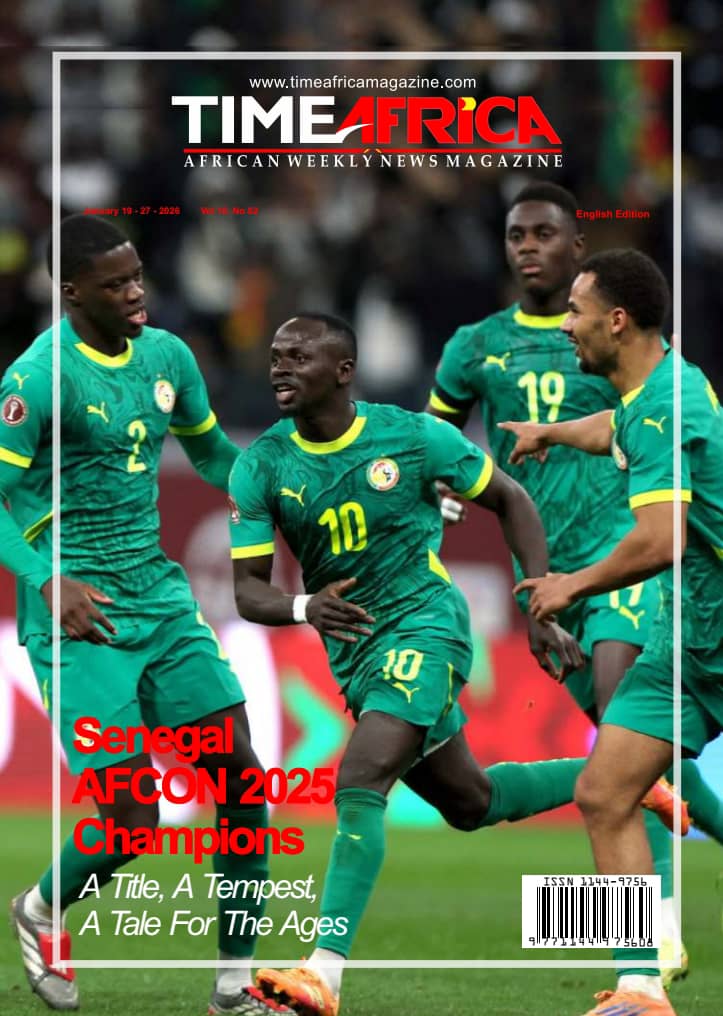
Rabat, Morocco — On a night that will be debated long after the final whistle, Senegal emerged as champions of the 2025 Africa Cup of Nations — but not in the way anyone expected.
In a final that combined breathtaking skill, raw emotion, and unprecedented controversy, the Lions of Teranga clinched a 1–0 extra-time victory over host nation Morocco at the Prince Moulay Abdellah Stadium in Rabat on Sunday, January 18, 2026. The winning moment arrived courtesy of Pape Gueye’s stunning strike in the 94th minute of extra time, but the story of this final extends far beyond the scoreboard.
The Calm Before the Storm
Senegal entered the final as one of Africa’s most consistent footballing nations, already crowned continental champions in 2021 and featuring star-studded names like Sadio Mané, Édouard Mendy, and Iliman Ndiaye. Morocco, on the other hand, was riding the fervent hopes of a home crowd — eager to end a 50-year AFCON title drought and solidify its rise as a football powerhouse.
Pre-match tensions foreshadowed the turbulence to come. The Senegalese Football Federation publicly complained of inadequate security and accommodations upon arriving in Rabat, fueling a sense that this final would be more than a match — it would be a battle for respect and fairness.
Yet, when the teams walked onto the pitch under the glowing lights and the roar of 69,000 fans, hope and pride filled the air. For a moment, it seemed like a classic tactical duel was unfolding — disciplined defenses, probing attacks, and cautious play that reflected not just skill, but the stakes involved.

Drama in the Details
As the regular 90 minutes ticked away without a goal, the tension mounted. Morocco, buoyed by home support, pressed relentlessly, while Senegal remained composed, absorbing pressure and probing for openings. The game teetered on a knife’s edge — each misplaced pass and each contested tackle growing in significance.
But when football met controversy, it did so at full force. In the 98th minute of stoppage time, after a lengthy VAR review, referee Jean-Jacques Ndala awarded a penalty to Morocco for a challenge inside the box — a decision that sparked outrage from the Senegalese bench. In an extraordinary protest, Senegal’s coach ordered his players off the pitch, a move rarely seen at this level of the sport and one that brought the final to an abrupt halt.
Stadium stewards struggled to control frayed nerves in the stands as fans reacted to the standoff. Chairs were thrown, tensions boiled over, and riot police were eventually called in to restore order — images that will be replayed for years as symbols of both passion and peril in modern sport.
It took Sadio Mané’s leadership — both on the pitch and in the dressing room — to persuade his teammates to return and resume play, a testament to his status not just as a great player but as a figure of gravitas within the squad.
When play resumed, Morocco’s Brahim Díaz stepped up to take the penalty. In a moment that will be etched into AFCON lore — for both shock and astonishment — Díaz’s Panenka attempt sailed meekly into the arms of Édouard Mendy, Senegal’s composed goalkeeper, preserving the 0–0 scoreline and taking the final into extra time.
Gueye’s Decisive Moment
Just minutes into the extra period, Senegal seized their chance. With a swift, incisive move that sliced through the Moroccan defence, Pape Gueye curled an exquisite strike into the top corner — a shot that seemed to defy gravity and send shockwaves through the stadium. That strike would be the only goal of the match, but it was enough to secure Senegal’s second AFCON title.
The relief and jubilation on the Senegal bench were palpable — not just relief for a hard-fought win, but validation in the face of a swirling controversy that could have overshadowed the night’s achievements.
After the Whistle: Reflection and Fallout
In victory, Senegal celebrated. In defeat, Morocco was left grappling with questions of destiny and missed opportunity. For the Atlas Lions, it meant another near-miss in their quest for continental glory. Their passionate supporters, who had backed the team with thunderous chants and displays of green and red, left the stadium with hearts heavy but heads held high.
For Africa as a whole, the match has ignited debates not just about refereeing decisions or VAR protocols, but about the very nature of sporting fairness, authority, and respect. The Senegal walk-off will likely be scrutinized by CAF and beyond, with potential disciplinary repercussions that could shape future tournaments.
Amid the chaos, figures like Mané and Mendy emerged not just as athletes, but as leaders — players capable of navigating not just the physical demands of high-stakes competition, but the emotional and ethical maelstroms that come with it.
Awards, Accolades, and the Man at the Centre
Every great final produces a hero, but the 2025 Africa Cup of Nations produced something rarer: a constellation of figures whose influence shaped the night in different ways. When CAF officials finally stepped forward to present the post-match awards — after tempers cooled and history had been made — the ceremony felt less like a routine conclusion and more like a reckoning.
Senegal, officially crowned Africa Cup of Nations Champions 2025, lifted the trophy for the second time in their history, confirming their status as the continent’s most consistently elite national side of the past decade. Unlike their 2021 triumph, which ended with a penalty shoot-out, this victory was forged in chaos, endurance, and leadership.
Match Awards and Tournament Honours:
- Man of the Match: Sadio Mané (Senegal)
While Pape Gueye supplied the decisive goal, CAF’s technical committee awarded Man of the Match to Sadio Mané, recognising his influence during the most volatile moments of the final. Mané orchestrated Senegal’s attacking rhythm, dropped deep to relieve pressure, and — most crucially — acted as peacemaker and leader when the match threatened to spiral out of control. - Goal of the Final: Pape Gueye
Gueye’s extra-time strike was later named Goal of the Match, a technically flawless finish that combined precision, power, and timing. It was a goal worthy of deciding a continental final — and one that instantly entered AFCON folklore. - Golden Glove (Tournament Best Goalkeeper): Édouard Mendy (Senegal)
Mendy’s penalty save from Brahim Díaz was the defining defensive moment of the tournament. Calm, composed, and utterly unflustered, he justified his award as AFCON 2025’s Best Goalkeeper, conceding just two goals across the entire competition. - Best Midfielder (Tournament): Pape Gueye (Senegal)
Gueye’s final performance crowned a superb tournament, earning him the Best Midfielder award — recognition of his energy, tactical intelligence, and ability to rise to decisive moments. - Fair Play Award: Morocco
In a symbolic gesture, Morocco received the Fair Play Award, a nod to their discipline across the tournament and an attempt to strike a conciliatory note after a final marked by controversy.
Sadio Mané: More Than a Captain
If this final had a moral centre, it was Sadio Mané.
At 33, Mané arrived in Rabat no longer merely Senegal’s most famous footballer, but its emotional compass. His career — Champions League winner, AFCON champion, global humanitarian — has given him a stature that transcends the pitch. That authority was never more evident than during the stoppage-time standoff.
When Senegal’s players left the field in protest, it was Mané who intervened. Television cameras captured him speaking calmly to teammates, gesturing toward the tunnel, then back to the pitch. He conferred with officials, appealed to reason, and ultimately persuaded Senegal to resume play — a decision that preserved the legitimacy of the final and, arguably, the spirit of the tournament itself.
In a sport often defined by theatrics and outrage, Mané’s restraint stood out. He understood what was at stake: not just a penalty decision, but Senegal’s reputation and African football’s global credibility.
“Great players win matches,” one Senegalese commentator later observed. “Great leaders protect the game.”
Mané finished the tournament with three goals and four assists, but numbers alone fail to capture his contribution. This AFCON may ultimately be remembered as the moment he completed his transformation from star forward to elder statesman — a figure whose influence extends beyond goals into governance, ethics, and unity.
A Continent’s Breath Held
Senegal’s triumph in Rabat will be remembered for its drama and contentious moments, but also for the unifying power of sport. Across West Africa, celebrations erupted long into the night. In Dakar and beyond, street parties lit up neighborhoods as fans sang and danced to mark a moment of continental pride.
Yet as the world watched, the final also reminded us that football — for all its beauty — mirrors life itself: unpredictable, passionate, flawed, and occasionally controversial.
In the end, Senegal stood triumphant — not just with a trophy, but with a story that will reverberate through African sport for years to come. This final was not simply about goals or penalties; it was about leadership, resilience, and the ability to navigate chaos while maintaining dignity. It was a final for the ages — one that will be remembered not just in Senegal, but across a continent that lives and breathes football as more than a game.