

Residents of Makoko, a 19th-century fishing community in Lagos Lagoon often referred to as the “Venice of Nigeria”, have been left homeless after government-ordered demolitions that community leaders say have displaced thousands of people.
Leaders in Makoko and two nearby settlements said at least 10,000 residents had lost their homes since demolitions began in late December. Humanitarian groups working in the area reported that at least four people had died during the clearances, including two infants and a 70-year-old woman who, they said, developed respiratory complications after tear gas was used to disperse residents attempting to protect their homes.
A spokesperson for Lagos state government declined to comment on the reported deaths, pointing instead to previous statements in which officials said the demolitions were necessary for public safety and urban planning. The government has argued that the settlement lies too close to a high-voltage power line crossing the lagoon, posing a potential risk if it were to fall.
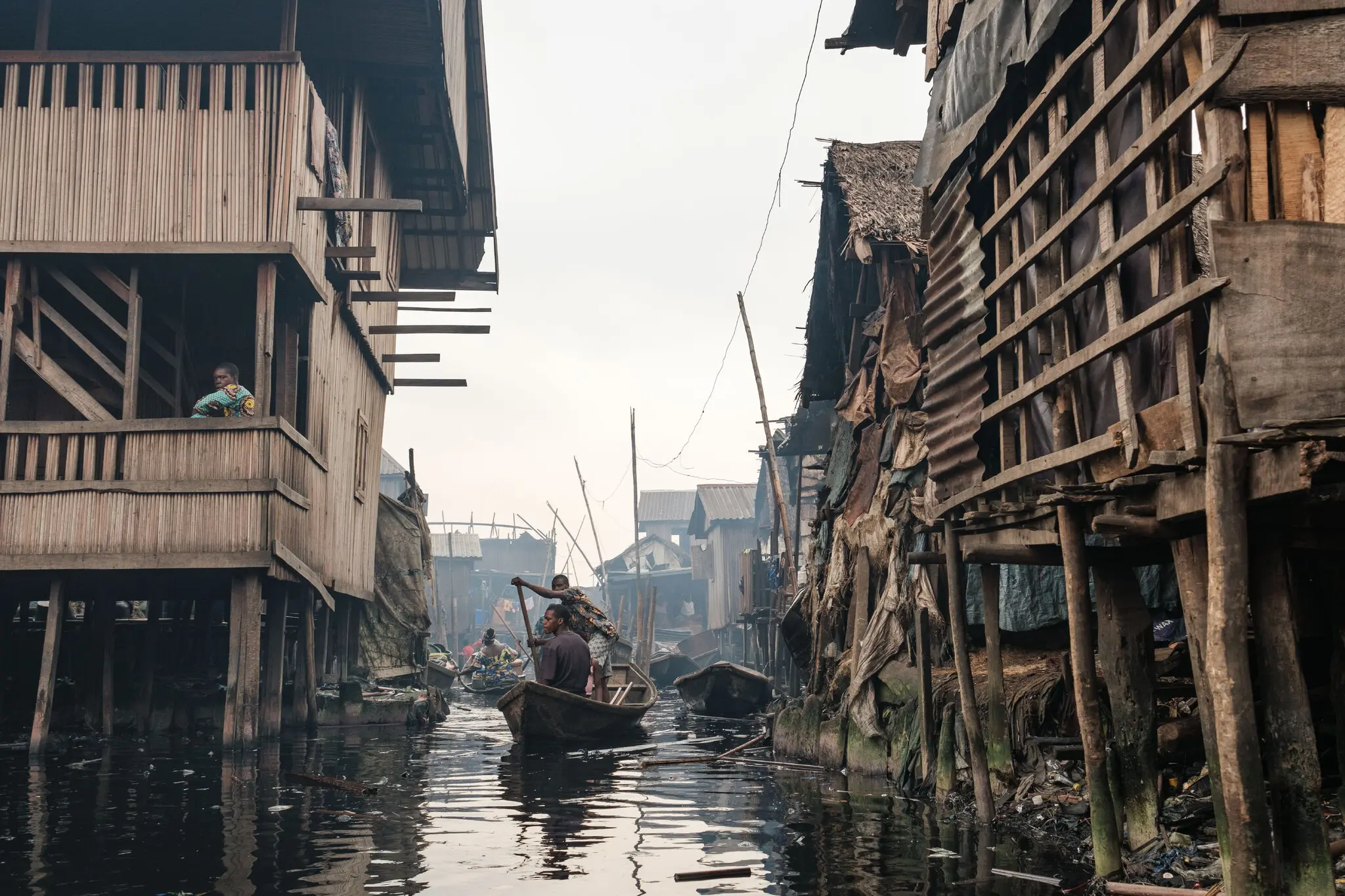
Makoko is one of several informal communities in Lagos, a city of about 20 million people, that have faced repeated clearance efforts in recent years as authorities pursue redevelopment projects. Residents say they are often given little or no notice before being ordered to leave.
Families have lived in Makoko since the 1800s, building wooden homes on stilts above the water and relying on fishing and fish smoking to supply markets across the city. The settlement, accessible only by canoe, sits in full view of commuters crossing a busy bridge linking parts of Lagos.
Last year, residents said they were told homes could not exist within 30 metres of the power line, a distance later extended to 100 metres. Community leaders said they met with government officials and agreed to comply. A Nigerian flag was planted in the lagoon to mark what residents said was the agreed boundary.
However, when amphibious excavators arrived, residents said the machines destroyed homes well beyond that limit. Non-profit groups working with the community used aerial images to estimate that demolitions extended as far as 500 metres from the power line.
On a recent morning, the crunching sound of an excavator echoed across the water as wooden homes and fishing shacks were reduced to splintered boards, plastic containers and scattered clothing. Some residents began dismantling their own houses, loading planks and sheets of tin into narrow canoes in the hope of rebuilding elsewhere.
“This was my house,” said Isaac Atamado, 15, standing beside the remains of a two-storey shack where he said 12 members of his family had lived. He said he ran when he saw the excavator approaching and was left barefoot, with only the clothes he was wearing.
Since then, he said, he and his brother have been sleeping on the floor of their canoe. “I don’t know where we will go,” he said.
Francis Samson Vituwa, a Makoko community leader whose family has lived in the settlement for generations, said thousands of residents were facing similar uncertainty. Living in Makoko had allowed him to support his wife and send his five children to school, he said.
“It’s a good life here,” Vituwa said. “There’s no good coming from this.”
State officials and private developers have made repeated attempts in recent years to clear waterfront communities in Lagos in the name of development, often drawing criticism from rights groups. Advocates argue that evictions are frequently carried out without adequate consultation, compensation or resettlement plans.
Several residents staged protests this week at the Lagos state house of assembly, where officials pledged on two occasions to pause the demolitions, according to Megan Chapman, co-director of Justice & Empowerment Initiatives, one of the organisations supporting residents.
Despite those assurances, residents said the demolitions had continued.
“There is still a community to save,” Chapman said.