
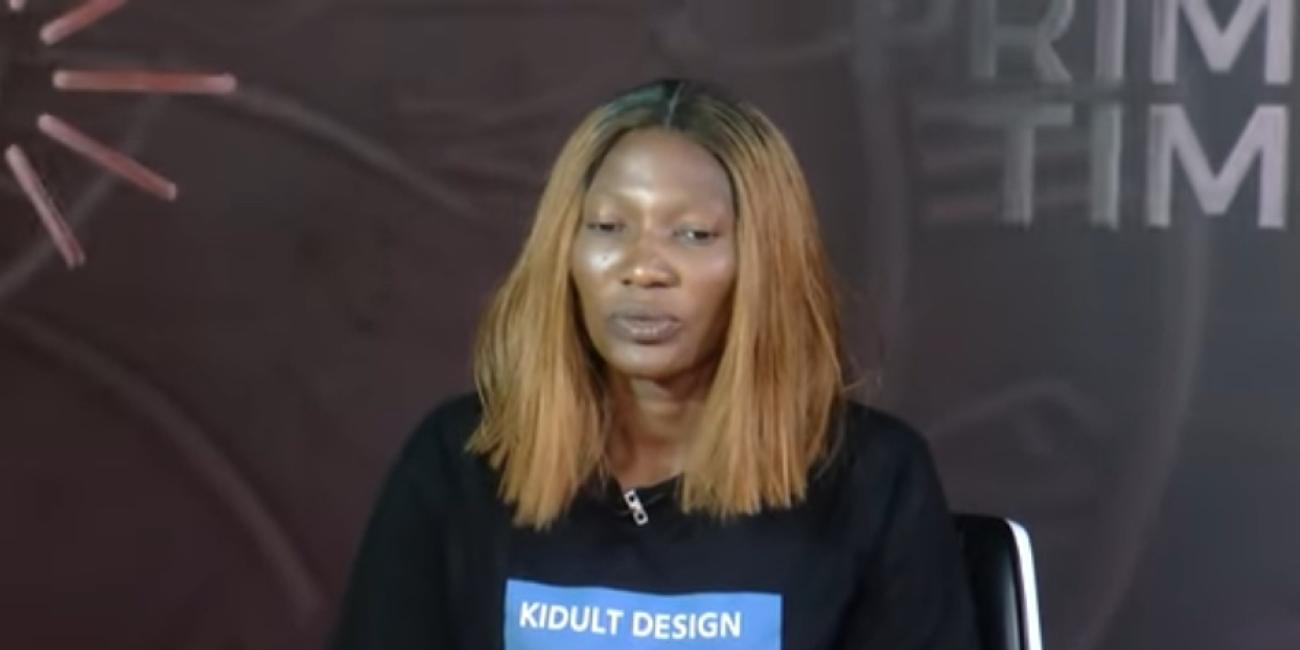
Fayina Akilawus still speaks like someone who has walked through hell and lived. Each sentence carries the weight of years stolen by Boko Haram—years of fear, hunger, chains and prayers whispered in the dark. Her crime, she says, was simple and unforgivable to her captors: she refused to abandon her Christian faith.
Abducted and dragged into Boko Haram captivity, Akilawus recalls the moment her life split in two. The gunmen, she said, gathered the captives and offered them a choice that was no choice at all.
Fayina Akilawus speaks slowly, as though each memory still hurts. Her story is not only one of survival, but of a woman who chose faith in the face of brutality—and paid for it with years of suffering.
She was abducted during one of Boko Haram’s raids, violently torn away from her former life and forced into a world ruled by guns and fear. Shortly after her capture, Akilawus said the militants gathered the women and issued a chilling ultimatum. Convert to Islam or be reduced to slaves.
“They told us plainly,” she recalled in an emotional interview on Arise Television on Wednesday. “‘If you become Muslims, you will live well. If you refuse, you will be our slaves.’”
Akilawus refused. That decision, she said, changed everything.
“They wanted me to convert to Islam, and I said no,” she said. “From that day, they treated us as property.”
Those who rejected conversion were condemned under what Boko Haram called their “law.” Akilawus said they were stripped of dignity and forced into relentless labour, serving fighters and their families from dawn until nightfall.
“We fetched water, carried firewood, cooked, cleaned—everything,” she said. “We worked until our bodies were weak. We had no rest.”
Beyond the physical exhaustion was a steady campaign of psychological pressure. Boko Haram members regularly returned to preach, she said, cloaking threats in the language of salvation.
“They said they wanted to make us better people,” she recalled. “They said life would be easier if we accepted their religion.”
For nine long months, the pressure continued. Nine months of refusing, of praying, of waiting. Akilawus said she was not alone; other women stood with her, clinging to their faith despite the consequences.
When the captors realised that persuasion had failed, cruelty followed. The women were separated and distributed to different homes like spoils of war.
“They said since we refused to be Islamised, they would separate us and take each of us to their houses to become slaves,” she said.
It was then that Akilawus decided she would rather die trying to escape than live without freedom.
Her first attempt came just days after being taken to a camp. Alongside another captive, Auntie Jumai, she fled under the cover of darkness.
“We left on a Saturday night,” she said. “We walked through the bush all night long.”
By morning, exhausted and disoriented, they heard the cry of a baby. Believing they had found safety, they approached a settlement and greeted the people there. Instead, they were recognised as strangers.
“Our clothes were different,” she said. “They started shouting.”
The women were recaptured and beaten mercilessly. Akilawus said they were forced to walk back to the camp through water and bush as their captors struck them.
“They beat us all the way back,” she said.
The punishment only hardened her resolve. She tried again. And again. And again.
Each failed attempt brought worse consequences. Her legs were bound with motorcycle chains. Beatings followed. Still, she refused to stop hoping.
“With God, all things are possible,” Akilawus said. “I told myself I would keep trying until I succeeded.”
Freedom, when it finally came, came at a terrible cost. She said they learned escape could be bought—but only with money. ₦250,000.
They saved in secret, selling belongings and hoarding small sums occasionally given to them. Every naira carried risk.
When the chance finally came, Akilawus escaped with nothing but her life.
Today, her story stands as a raw testament to the suffering endured by countless captives in Nigeria’s insurgency—and to the quiet, stubborn courage of a woman who refused to let violence dictate her belief.
“They tried to break me,” she said softly. “But my faith kept me alive.”