Wednesday, February 4, 2026
  • Who’sWho Africa AWARDS
  • About TimeAfrica Magazine
  • Contact Us
Time Africa Magazine
  • Home
  • Magazine
  • WHO’SWHO AWARDS
  • News
  • World News
    • US
    • UAE
    • Europe
    • UK
    • Israel-Hamas
    • Russia-Ukraine
  • Politics
  • Crime
  • Lifestyle
  • Sports
  • Column
  • Interviews
  • Special Report
No Result
View All Result
Time Africa Magazine
  • Home
  • Magazine
  • WHO’SWHO AWARDS
  • News
  • World News
    • US
    • UAE
    • Europe
    • UK
    • Israel-Hamas
    • Russia-Ukraine
  • Politics
  • Crime
  • Lifestyle
  • Sports
  • Column
  • Interviews
  • Special Report
No Result
View All Result
Time Africa Magazine
No Result
View All Result
  • Home
  • WHO’SWHO AWARDS
  • News
  • Magazine
  • World News

Home » Special Report » Senegal’s billions in hidden debt, and why it is an IMF headache

Senegal’s billions in hidden debt, and why it is an IMF headache

By Portia Crowe and Libby George | Reuters

July 27, 2025
in Special Report
0
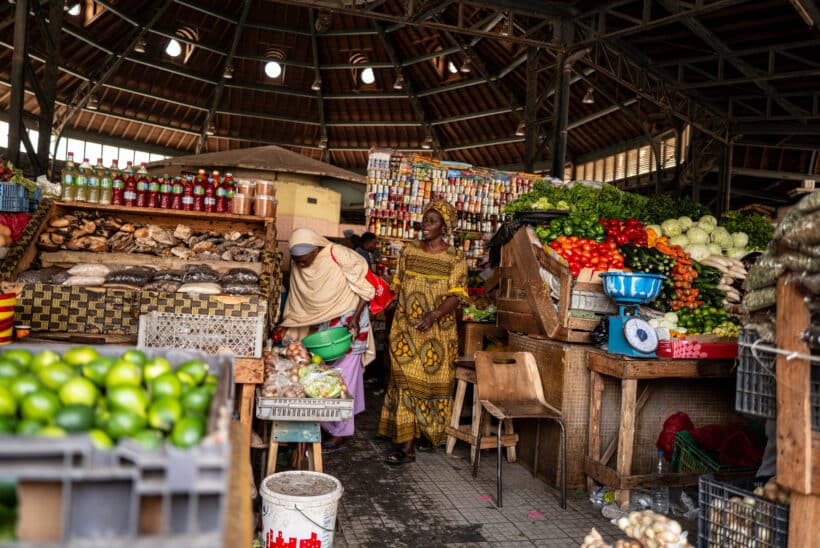
A woman buys vegetables at Kermel Market, in downtown Dakar, Senegal, May 15, 2025. REUTERS/Zohra Bensemra/File photo

A woman buys vegetables at Kermel Market, in downtown Dakar, Senegal, May 15, 2025. REUTERS/Zohra Bensemra/File photo

Share on FacebookShare on Twitter

ReadAlso

Global Economy Set for Weakest Run Since 2008 Outside of Recessions  

IMF approves $1.2 billion for Egypt after fourth review

DAKAR/LONDON – Senegal is grappling with billions of dollars in debt that was hidden by the previous administration – a problem for the cash-strapped country whose Prime Minister Ousmane Sonko is expected to present a comprehensive economic recovery plan next week.

The issue has also raised questions for the International Monetary Fund, which at the time had been monitoring Senegal’s finances under a loan programme.

What is the debt, why have the figures changed and what is next for Senegal and the IMF?
WHAT HAPPENED?

In September 2024, Senegal said an audit of government finances, which had been ordered by newly elected President Bassirou Diomaye Faye, put the end-2023 budget deficit at over 10%, significantly wider than the 5% reported by the previous administration.

Faye’s government ordered a further audit, and the IMF froze Senegal’s three-year, $1.8 billion credit facility, which had been agreed in June 2023.

Since then, Senegalese authorities have worked to determine the full scale of the debt and keep the government running in the face of curtailed resources and a lack of access to IMF funds or international bond markets.

It is unclear how the off-books borrowing was spent. Current Prime Minister Sonko has accused the previous government of corruption, and there are some ongoing court cases related to alleged theft of COVID-19 funds.

WHY DO THE NUMBERS KEEP CHANGING?

A Court of Auditors review in February calculated that overall debt at the end of 2023 was equivalent to 99.7% of Senegal’s gross domestic product, well above the previous figure of 74.41%. That new total implied hidden borrowing of around $7 billion.

But in June, provisional figures put central government debt of around 23.2 trillion CFA francs ($41.73 billion) by end-2024, a more than 27% increase from end-2023.

This translates to a 119% debt-to-GDP ratio, according to Barclay’s economist Michael Kafe, who said on June 30 that the new figure presented “new risks to the debt trajectory and likely complicates on-going talks with the IMF.”

S&P Global Ratings, in its downgrade of Senegal’s credit rating this month, pegged hidden debts at around $13 billion and the ratio at 118%.

This would make Senegal one of the most indebted countries in Africa, placing it in a small, unenviable club alongside Zambia, Cape Verde and Sudan.

WHAT OF THE IMF?

Senegal is not the first case of hidden debt.

Mozambique’s infamous “tuna bond” scandal is the most recent high-profile example in Africa. But at roughly $3 billion, Mozambique’s secret debt is dwarfed by Senegal’s.

The IMF, which has come under fire for not catching the off-books lending, did not comment when contacted by Reuters, but it has previously said it will review what happened once it has all the information.

In the meantime, the IMF’s executive board must approve either a waiver for misreporting or order Senegal to pay back previous programme disbursements. With a waiver, Senegal can negotiate a new programme.

Few expect the IMF to order Senegal to repay, which would effectively punish the current government’s transparency. But negotiations have taken longer than expected.

Senegal had hoped for a new programme by June. The IMF said a decision on the waiver was unlikely before June or July. In a June 14 statement, the government said it had shared all the results from its “reconciliation exercise” with the IMF.

Sources expect action on a waiver in September, though the IMF could discuss Senegal earlier. An IMF spokesperson said the board would consider the data misreporting “in due course”.

WHAT ARE SENEGAL’S OPTIONS?

Prime Minister Sonko has said next week’s economic recovery plan will “tell the Senegalese how to get the country back on its feet, point by point.”

A new IMF programme would help them finance that plan, but crucially would also give foreign investors confidence to lend again. To get one, however, Senegal must demonstrate how it will return to debt sustainability.

Senegal’s bonds rallied earlier this month after it said it would rebase its economy for the first time since 2018, which some investors say could push its debt-to-GDP back down into double digits, a potentially more palatable level for the IMF.

The government could also attempt to reprofile debt by pushing payments further into the future but is expected to avoid a full restructuring.

Senegal – due to its membership in the West African currency union UEMOA – does not have a problem sourcing the hard currency it needs to repay loans. And a restructuring could destabilise some regional banks holding its debt, which would be bad for the region.

(Reporting by Portia Crowe and Libby George; Editing by Karin Strohecker and Joe Bavier)

ADVERTISEMENT

Related

Tags: IMFSenegal Debt
ADVERTISEMENT
Previous Post

Borderless ambitions: unlocking intra-African trade through agro-industrial investment

Next Post

Ghana narrows fiscal deficit target after better-than-expected first half

You MayAlso Like

Special Report

Tragedy and systemic failure: What Ifunanya Nwangene’s death reveals about Nigeria’s healthcare system

February 4, 2026
Featured

Nigeria: How suspected coup plotters planned to truncate Buhari’s handover to Tinubu

January 30, 2026
Special Report

Niger’s military ruler vows retaliation after gunfire and explosions in capital

January 30, 2026
Special Report

In Nigeria, a Catholic Bishop Kukah Navigates a Nation of Extremes

January 30, 2026
Special Report

American Air Strikes In Nigeria: Who, Exactly, Was Hit?

January 26, 2026
Special Report

Egyptian-Chinese archaeologists uncover ancient “sacred lake”

January 25, 2026
Next Post
Market women interact at the Agbogbloshie market in Accra, Ghana. November 28, 2024. REUTERS/Francis Kokoroko/File Photo 

Ghana narrows fiscal deficit target after better-than-expected first half

Exclusive Interview with Somaliland President Abdirahman Mohamed Abdullahi 

Discussion about this post

What Became of Gaddafi’s Surviving Children

Trump deploys troops to Nigeria to support counter-terrorism operations

Moammar Gadhafi’s son, Seif al-Islam Gadhafi, reported killed

Three Key Factors Influencing the Global Economy in 2026

US publishes names of 79 Nigerians set for deportation over criminal convictions

Tragedy and systemic failure: What Ifunanya Nwangene’s death reveals about Nigeria’s healthcare system

  • The body of the dead former Libyan leader Muammar Gaddafi lies on a mattress inside a storage freezer in Misrata. Photograph: Mohamed Messara/EPA

    What Became of Gaddafi’s Surviving Children

    594 shares
    Share 238 Tweet 149
  • Trump deploys troops to Nigeria to support counter-terrorism operations

    542 shares
    Share 217 Tweet 136
  • Moammar Gadhafi’s son, Seif al-Islam Gadhafi, reported killed

    542 shares
    Share 217 Tweet 136
  • Three Key Factors Influencing the Global Economy in 2026

    542 shares
    Share 217 Tweet 136
  • US publishes names of 79 Nigerians set for deportation over criminal convictions

    542 shares
    Share 217 Tweet 136
  • Trending
  • Comments
  • Latest
The body of the dead former Libyan leader Muammar Gaddafi lies on a mattress inside a storage freezer in Misrata. Photograph: Mohamed Messara/EPA

What Became of Gaddafi’s Surviving Children

April 15, 2025

Trump deploys troops to Nigeria to support counter-terrorism operations

February 4, 2026

Moammar Gadhafi’s son, Seif al-Islam Gadhafi, reported killed

February 4, 2026

Three Key Factors Influencing the Global Economy in 2026

February 3, 2026

‘It hurts me’ – Guardiola vows to speak up on conflicts

February 4, 2026

The truth behind Man City’s new ‘reality’ that Pep Guardiola has missed

February 4, 2026

Why has Cristiano Ronaldo gone ‘on strike’ at Al-Nassr?

February 4, 2026

Trump deploys troops to Nigeria to support counter-terrorism operations

February 4, 2026

ABOUT US

Time Africa Magazine

TIMEAFRICA MAGAZINE is an African Magazine with a culture of excellence; a magazine without peer. Nearly a third of its readers hold advanced degrees and include novelists, … READ MORE >>

SECTIONS

  • Aviation
  • Column
  • Crime
  • Europe
  • Featured
  • Gallery
  • Health
  • Interviews
  • Israel-Hamas
  • Lifestyle
  • Magazine
  • Middle-East
  • News
  • Politics
  • Press Release
  • Russia-Ukraine
  • Science
  • Special Report
  • Sports
  • TV/Radio
  • UAE
  • UK
  • US
  • World News

Useful Links

  • AllAfrica
  • Channel Africa
  • El Khabar
  • The Guardian
  • Cairo Live
  • Le Republicain
  • Magazine: 9771144975608
  • Subscribe to TIMEAFRICA MAGAZINE biweekly news magazine

    Enjoy handpicked stories from around African continent,
    delivered anywhere in the world

    Subscribe

    • About TimeAfrica Magazine
    • Privacy Policy
    • Contact Us
    • WHO’SWHO AWARDS

    © Copyright TimeAfrica Magazine Limited 2026 - All rights reserved.

    No Result
    View All Result
    • WHO’SWHO AWARDS
    • Politics
    • Column
    • Interviews
    • Gallery
    • Lifestyle
    • Special Report
    • Sports
    • TV/Radio
    • Aviation
    • Health
    • Science
    • World News

    © Copyright TimeAfrica Magazine Limited 2026 - All rights reserved.

    This website uses cookies. By continuing to use this website you are giving consent to cookies being used. Visit our Privacy and Cookie Policy.