


China’s nuclear forces are expanding quickly. Yet behind that rise, the top leader Xi Jinping’s sweeping purge of generals and military leaders has exposed deep-seated corruption and raised questions about the country’s ability to manage its growing arsenal.
The uncertainty adds to concerns about a new era of volatility in global nuclear politics, as President Trump has called for renewed U.S. testing and as Washington is also pushing through major changes in its military.
President Trump’s defense secretary, Pete Hegseth, has fired or sidelined at least two dozen generals and admirals over the past nine months, actions that are without precedent in recent decades, and have come with little explanation. The shake-up has raised fears of growing political interference in a military that has long prided itself on being apolitical.
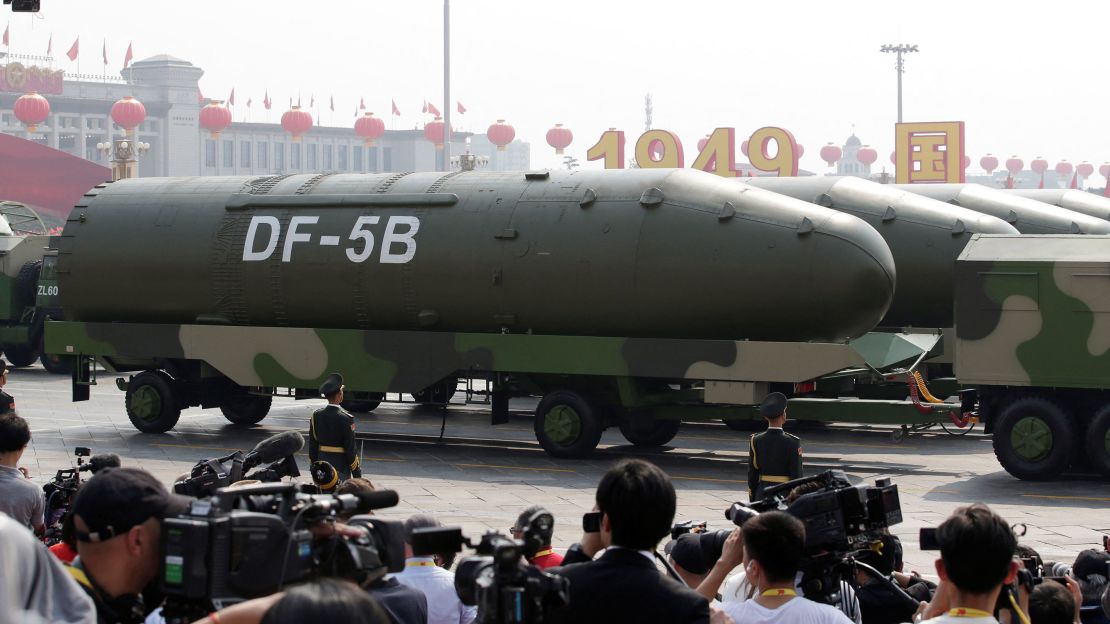
In Beijing, Mr. Xi’s purges in the People’s Liberation Army cut far deeper. He has carried out a cleanup that has shaken the Rocket Force, the branch that oversees China’s nuclear forces and is a crucial part of Mr. Xi’s ambition to build a “world-class military” by 2049. Top commanders have disappeared. Others have been jailed. And defense contractors have been stripped of their party titles and detained for investigation.
While Mr. Trump and Mr. Hegseth’s motivations in reshaping the U.S. military are not entirely clear, Mr. Xi’s purges stem from a lesson he has drawn from history: that the Communist Party survives only when the army obeys one leader without question.
Early in his rule, Mr. Xi warned that the Soviet Union collapsed because the party lost control of its military and no “real man” had stepped forward, noted Joseph Torigian, an associate professor at American University who has studied Chinese leaders’ relations with the military.
His military purges likely reflect his obsession with preparing for worst-case scenarios at home and abroad, whether it is protests over economic problems or political suppression, or needing to fight the United States in a war over Taiwan, the democratically governed island Beijing claims as its territory.
“So what’s the biggest threat to building a military that can defeat competitors within the elite, people in the streets, and the Americans in a war?” Mr. Torigian wrote in an email. “Corruption is the ‘key link.’”
Mr. Xi thinks materialism and corruption are a direct threat to the military’s ability to defeat enemies, Mr. Torigian said. “In Xi’s mind, it makes members of the military vulnerable to Western infiltration, whether literally in terms of becoming an agent, or because Western values lead to a desire to ‘nationalize’ the military and split it from party control.”
In a commentary on Tuesday, the official newspaper of the People’s Liberation Army wrote: “For our military, the fight against corruption is a major political struggle that it cannot afford to lose, and must not lose. It concerns the long-term stability of the party and the country, and it concerns ensuring the socialist red state never changes color.”
That also highlights a major difference between the functions of the militaries in both countries: In China, the military is built to defend the ruling party, primarily; in the United States, it is meant to defend the entire nation and to stand apart from politics.
The ousters in China reveal serious dysfunction in the military and muddy confidence in its war readiness. It also suggests that the People’s Liberation Army, or P.L.A., may be one of the few organizations that Mr. Xi, arguably China’s most powerful leader since Mao Zedong, has failed to bring under his control.
“Corruption has been a very real problem for the P.L.A., and it is, in fact, corrosive for the military, which is why Xi is serious about uprooting it,” said Jonathan Czin, a researcher at the Brookings Institution who previously worked at the C.I.A. analyzing Chinese politics.
When Mr. Xi came to power in 2012, the Chinese military was plagued with an image problem as a hotbed of corruption. Senior commanders funded lavish lifestyles through bribery and embezzlement. Promotions were commonly up for sale. And military license plates were sold to civilians as they gave their owners near impunity on China’s roads.
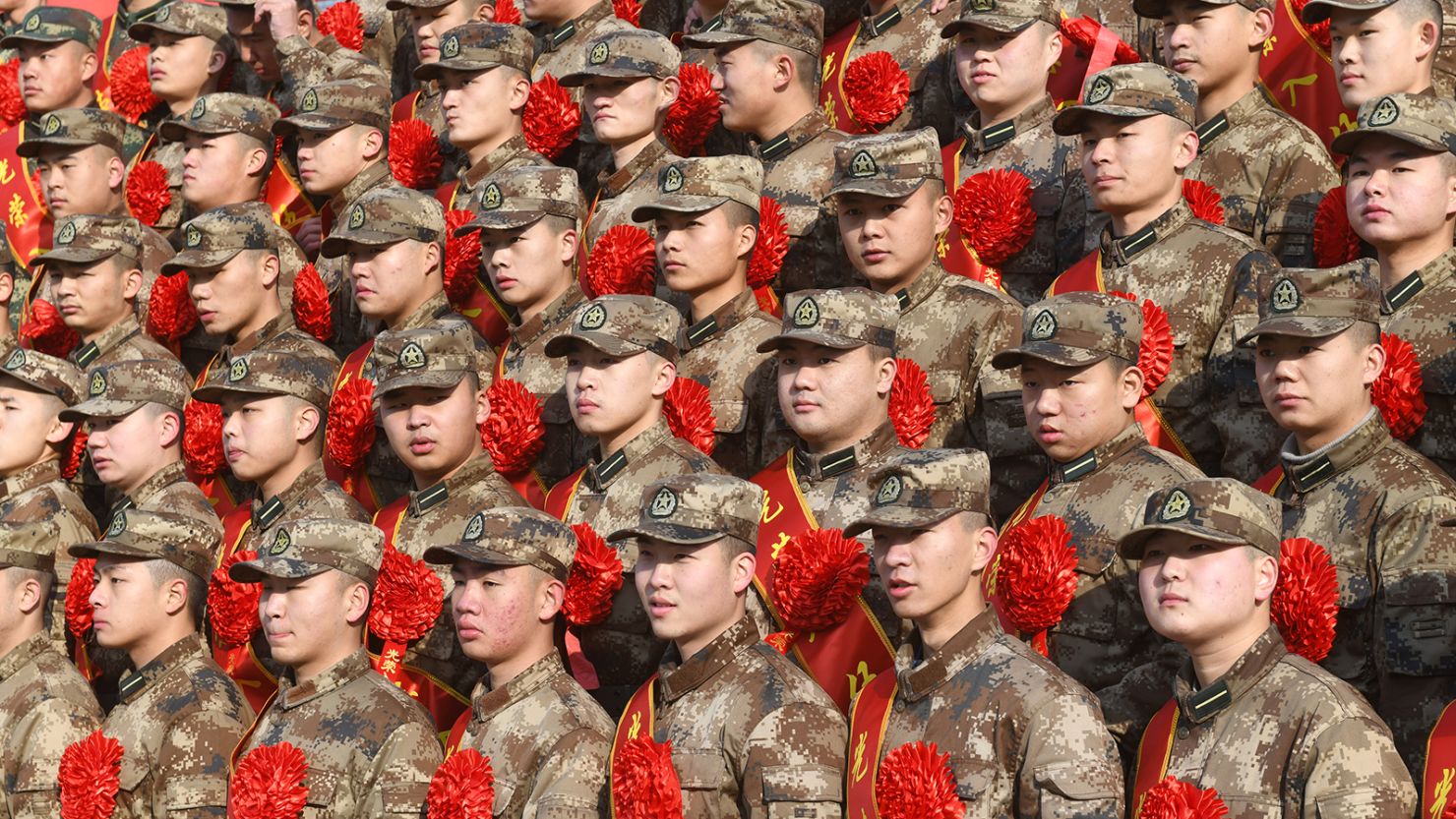
Mr. Xi vowed to professionalize the P.L.A. and ensure that it answered to him as head of the party; he quickly removed rival factions led by commanders that were loyal to past leaders. A decade later, the house cleaning has only intensified, even ensnaring senior leaders who were handpicked by Mr. Xi. That includes Gen. He Weidong, who was third in China’s military hierarchy when he was expelled from the party on Oct. 17, accused of corruption and abuse of power.
Other expelled generals included Adm. Miao Hua, who oversaw political discipline in the military and was placed under investigation last year. Another was Gen. Lin Xiangyang, who was in charge of the Eastern Theater Command, which is central to any war over Taiwan.
Perhaps most troubling for Mr. Xi are the signs of corruption in the rocket force, which controls nearly all of China’s nuclear missiles and had been considered one of the crown jewels of the Chinese military. Since 2023, the branch has been rocked by a series of purges of senior commanders over corruption that have raised questions about its effectiveness. A Pentagon report last year said fraud in the rocket force led to problems involving the construction of underground missile silos.
Analysts say the branch is ripe for corruption because it maintains one of the largest budgets in the Chinese military. Unlike warplanes and tanks, missiles are also rarely tested, increasing the difficulty in detecting malfeasance.
Some analysts say corruption in the rocket force may also be fueled by skepticism that China will ever go to war. Were there a greater sense of urgency, they argue, there would probably be less chance that defense contractors would cut corners and military leaders would line their pockets.
At the same time, China’s military modernization has been advancing apace. A military parade in Beijing earlier this year showed off some of the country’s latest drones, unmanned submarines and hypersonic missiles. Also displayed were the latest ICBMs, a reminder of China’s nuclear weapons buildup that could see the country nearly double its arsenal by 2030.
Even though both the American and Chinese militaries are undergoing high-level leadership changes, they each still have deep benches of senior officers to draw from, said Mr. Czin of Brookings.
The question, though, is whether their leaders’ preoccupations are eroding focus on core missions: China’s drive to take Taiwan, and America’s effort to deter it.
Mr. Xi regards the United States as the chief obstacle in realizing his goal of unifying Taiwan with China. American intelligence officials have said that Mr. Xi has ordered that the Chinese military be capable of seizing the self-governed island by 2027, which will be the 100th anniversary of the founding of the P.L.A.
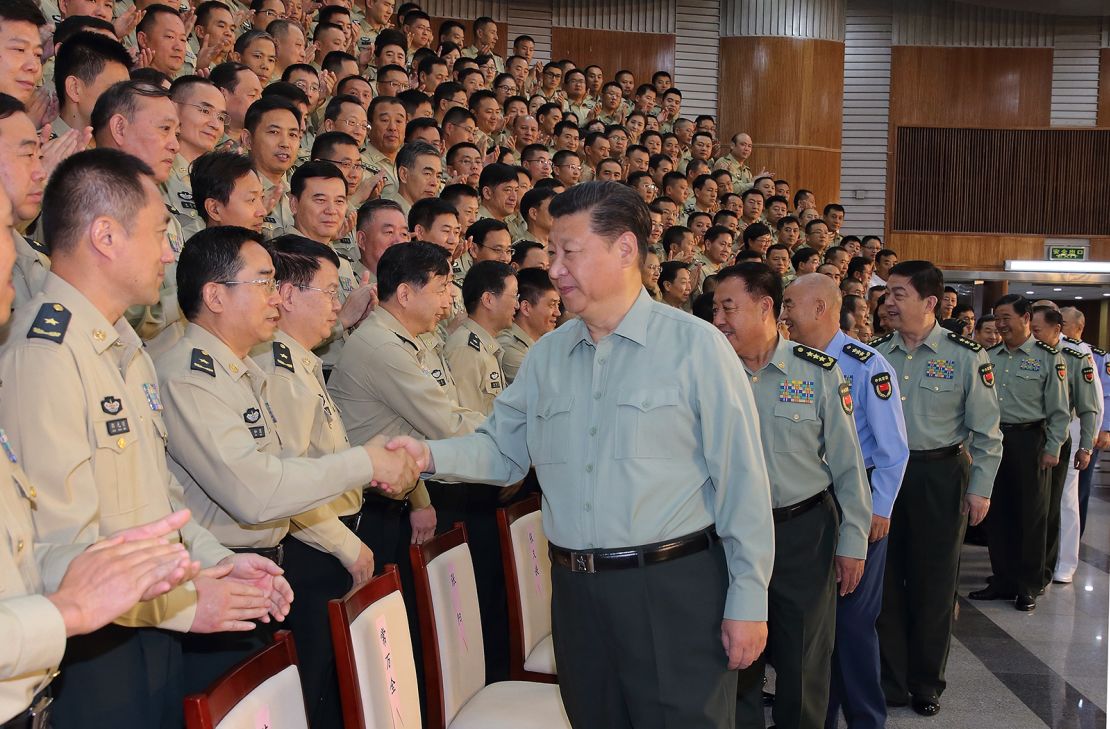
The rocket force plays prominently in those plans. China has developed anti-ship missiles, known as “carrier killers,” aimed at blocking U.S. aircraft carrier groups from the battle zone in a conflict over Taiwan. It has also built hypersonic missiles designed to strike U.S. bases across the Pacific, including in Guam, the Philippines, South Korea and Japan.
A bipartisan, congressionally appointed commission warned last year that China was surpassing the United States in military advantage in the Western Pacific because of two decades of focused investment. “Without significant change by the United States, the balance of power will continue to shift in China’s favor,” the Commission on the National Defense Strategy said.
For China, however, countering the U.S. military is the “first, second and third priority,” Mr. Czin said.
Chris Buckley contributed reporting from Taipei, Taiwan.


Discussion about this post