


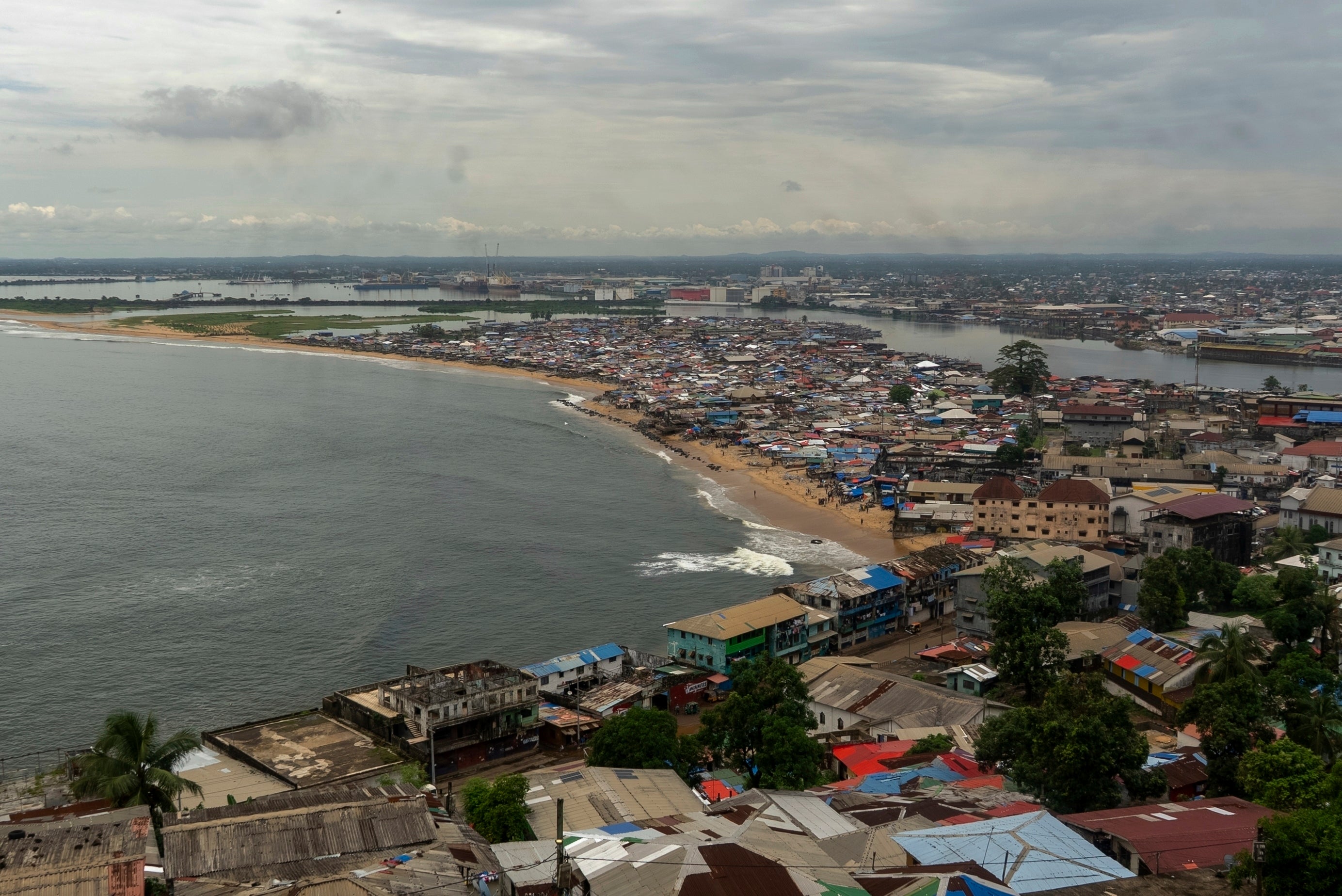
Year after year, the small, densely forested west African nation of Liberia is facing ever more extreme impacts of the climate crisis, including floods and droughts that wreak havoc for farmers and coastal erosion driven by rising sea levels.
“In May this year, I stood under a coconut tree by the sea in the city of Greenville, to mark the groundbreaking of a new coastal protection scheme,” says Emmanuel Yarkpawolo, executive director of Liberia’s Environmental Protection Agency. “When I returned to the same spot in September, just a few months later, the coconut tree was gone because of the coastal erosion we are seeing. That’s how bad things are in our country.”
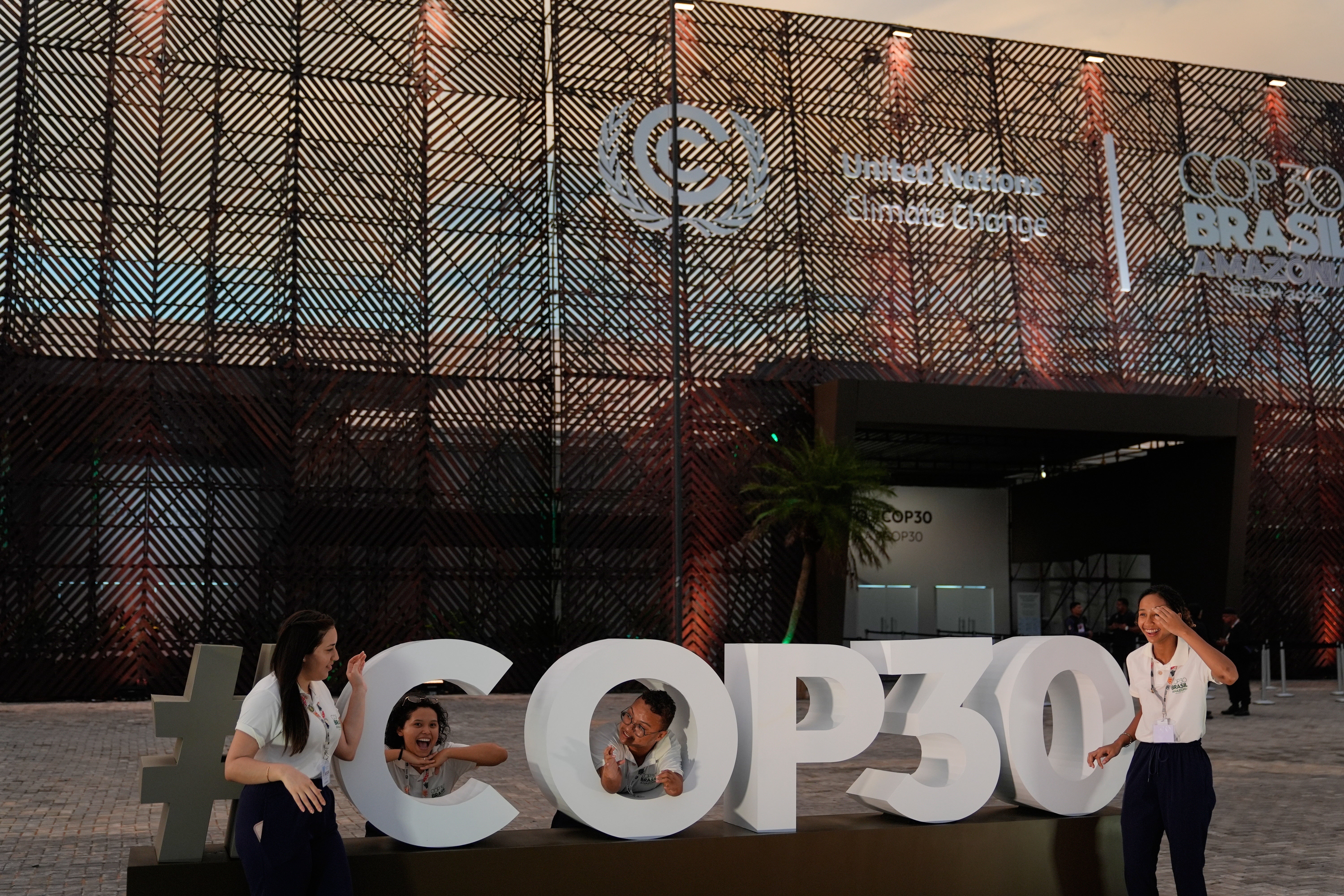
The Independent met Yarkpawolo at Liberia’s modest country pavilion at the UN climate conference Cop30, where he was taking a break from his work as the country’s chief negotiator. Indeed, the Liberia pavilion – which was funded with help from the UN Development Programme – was filled with delegates from several other west African nations, with many unable to afford their own national base. It was a marked contrast to the vast, multi-roomed national hubs of many Western or oil-rich nations.
The wealth of a country makes no difference to its standing at the official Cop30 negotiations, however, where all 198 parties to the United Nations Framework Convention on Climate Change are given equal status. “It’s why least developed countries are so committed to the UN system here, because it’s the only space that really gives them a voice,” explains Mohamed Adow, from the Nairobi-based think tank Power Shift Africa. “The US or UK can cut aid without any consultation with the recipient country – but these countries will keep coming here in good faith, hoping that the rest of the world will start to notice what is happening to them.”
In order to address so many states needing to contribute, nations form “country groups” at the UN, which negotiate as collective entities. Liberia, for example, is part of the Africa Group, the G77 Group of developing nations, and the Least Developed Countries (LDC) group.
Chairing the LDC group at Cop30 is Malawi: a southern African nation similarly stricken by impacts of the climate crisis, including droughts that are devastating its rain-fed agriculture system, and ever-more devastating Indian Ocean cyclones. GDP per capita in Liberia is only $850 (£650), while in Malawi it is even lower at $500 – so it is perhaps understandable that the chief negotiator of Malawi, and LDC group chair, Evans Njewa, has said that the priority for LDCs at Cop30 will be calling for more support for adapting to climate change agenda, along with a request for more climate aid to be available from rich countries.
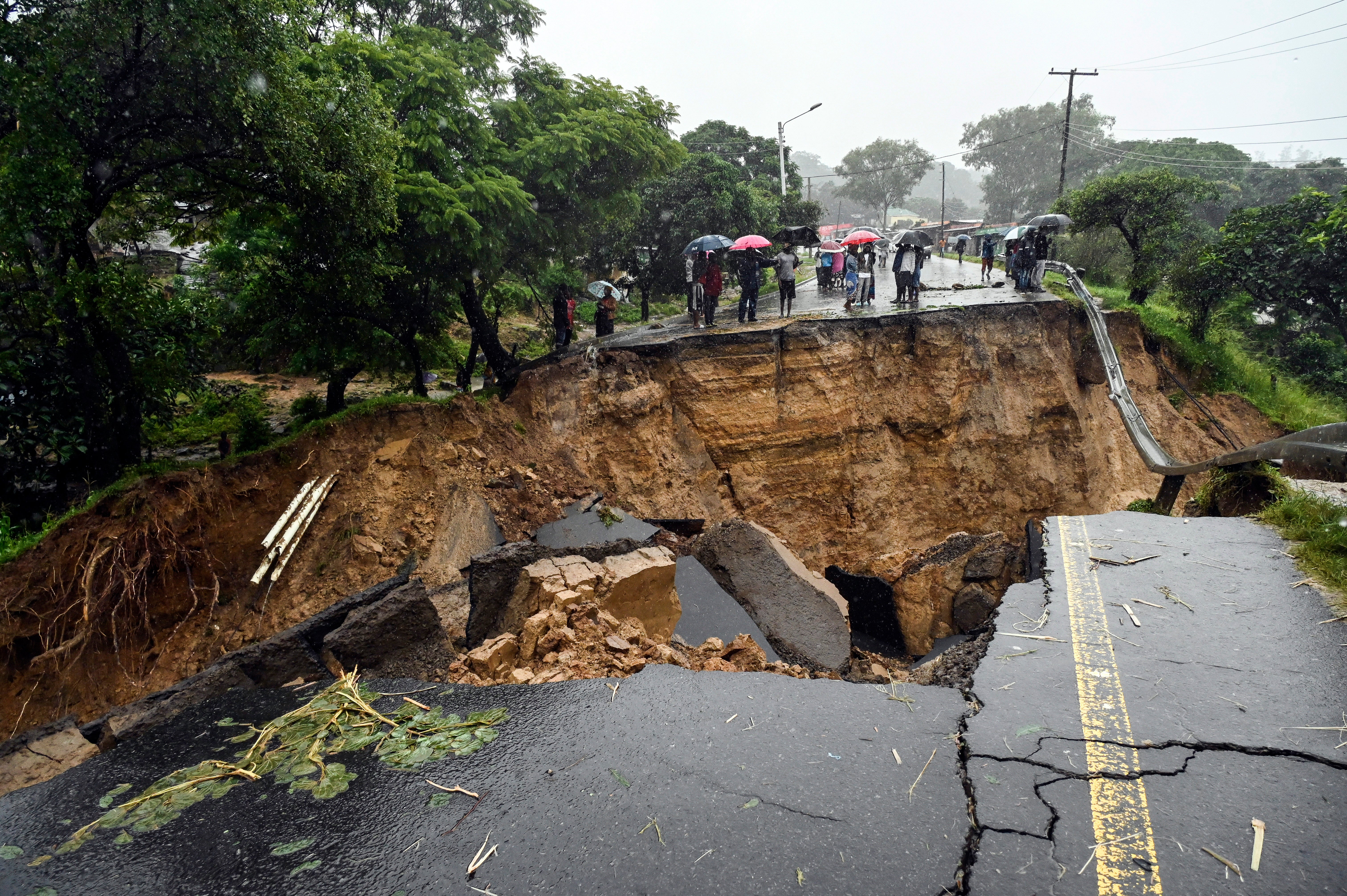
“Adaptation” can include everything from mangrove forests to protect coasts, to the distribution of seeds for drought-resistent crops, to the construction of flood defences. That is different to “mitigation”, which is about reducing carbon emissions.“Adaptation is the priority for the group of Least Developed Countries. Our 44 countries did not light this fire, but we are burning in its heat,” said Njewa at a press conference this week.
He added that “funding to enable our countries to defend ourselves against climate impacts” is also key. A pledge made at Cop26 in Glasgow in 2021 to double foreign aid for climate adaptation is due to expire this year – and Njewa said that poorer nations would like the current level of adaptation finance to undergo a further tripling to reach $120bn by 2030.
The ‘pickle’ presented by aid cuts
However, countries across Europe and the US have been slashing the foreign aid budgets that fund international climate programmes over the past year. At this stage of Cop30, it looks pretty hard to see how less developed nations will get what they want.
“They really are in a pickle,” says Debbie Hillier, policy lead for the international NGO Mercy Corps at Cop30. “Rich countries have a legal obligation to provide finance: it’s in the Paris Agreement [the landmark treaty signed 10 years ago at Cop21], but there’s no public finance available.
“We know how to do it: we have all the solutions, and we know it has to be locally led and designed from the bottom up. The only thing missing is the finance.”
Ahead of Cop30, Brazil and Azerbaijan – which hosted the previous UN climate conference Cop29 – released a document called the “Baku to Belem Roadmap”, which is intended to outline how countries and the private sector can increase money available to address the climate crisis, given the lack of public finance that is available.
Specifically, the roadmap sets out a new pathway to achieve the climate finance goal agreed at Cop29 – namely, to channel $1.3 trillion per year into developing countries by 2035. It outlines several key areas through which this can be done, including addressing debt and providing more grants and low-cost loans.
The reception of the report has been lukewarm at best: “The actions and recommendations outlined in the Baku to Belem Roadmap are high-level and framed in noncommittal terms,” says Anna Aberg from the think tank Chatham House.
Mercy Corps’ Hillier adds that there is “some good stuff and some bad stuff”, but there is a lack of “evidence and numbers”, as well as a failure to acknowledge “common but differentiated responsibilities” – essentially that rich countries have a greater responsibility to act than poorer countries.
The latest UN Adaptation Gap report found that developing countries will require $310-$365bn in adaptation finance per year by 2035, around 12 to 14 times greater than the $26bn available in 2023.
Cleaning up the mess
Philip Hein, the head of global climate investments at the main German development finance institute DEG, believes that no matter what spin the UN climate negotiators might put on, it is unlikely that private investors are going to start investing significantly in climate adaptation.
“If you look from a commercial perspective, commercial money will go after assets that have commercial returns,” he told The Independent ahead of Cop30 at the AVCA Sustainable Investing in Africa Summit in London. “I like the spirit of being bullish … but looking at the development of certain areas, it is clear that grant finance is needed.”
Mauricio Vazquez, from the think tank ODI, adds that the need for foreign aid for climate adaptation becomes even more pronounced when less-developed countries are facing conflict, as 23 out of 44 are. At the moment, these countries receive just 10 per cent of global climate finance – and there have been no signs from Brazil of this particular agenda being pushed at Cop30.
“Brazil talks about COP30 as a ‘people-focused’ climate conference, but their silence on conflict risks abandoning the most vulnerable people,” says Vazquez. “More than half of the 25 most climate-vulnerable countries are fragile or conflict-affected – but donors find it easier to send aid in the aftermath of climate disasters than to invest in building their long-term climate resilience.”
Liberia’s own civil war ended more than 20 years ago in 2003, but the country has struggled to shake off perceptions around instability, resulting in foreign direct investment of just $750m in 2023, according to the US State Department. It now needs a massive scale-up in foreign assistance to address the climate crisis – and the fact that the money available appears to be going the other way is deeply disappointing for climate envoy Yarkpawolo.
“Not providing aid to support climate finance really is disastrous for countries like ours,” he says. “But more than that, it’s a question of justice: you rich countries are emitting more, and you are creating this mess, so it’s pretty straightforward that you need to now clean up the mess.”
This article was produced as part of The Independent’s Rethinking Global Aid project


Discussion about this post