Saturday, December 6, 2025
  • Who’sWho Africa AWARDS
  • About TimeAfrica Magazine
  • Contact Us
Time Africa Magazine
  • Home
  • Magazine
  • WHO’SWHO AWARDS
  • News
  • World News
    • US
    • UAE
    • Europe
    • UK
    • Israel-Hamas
    • Russia-Ukraine
  • Politics
  • Crime
  • Lifestyle
  • Sports
  • Column
  • Interviews
  • Special Report
No Result
View All Result
Time Africa Magazine
  • Home
  • Magazine
  • WHO’SWHO AWARDS
  • News
  • World News
    • US
    • UAE
    • Europe
    • UK
    • Israel-Hamas
    • Russia-Ukraine
  • Politics
  • Crime
  • Lifestyle
  • Sports
  • Column
  • Interviews
  • Special Report
No Result
View All Result
Time Africa Magazine
No Result
View All Result
  • Home
  • WHO’SWHO AWARDS
  • News
  • Magazine
  • World News

Home » Special Report » Why the ant-smuggling trade is booming – and why we should care

Why the ant-smuggling trade is booming – and why we should care

Organised crime groups have moved from smuggling drugs to insects, write ELLIOT DOORNBOS and ANGUS NURSE

May 14, 2025
in Special Report
0
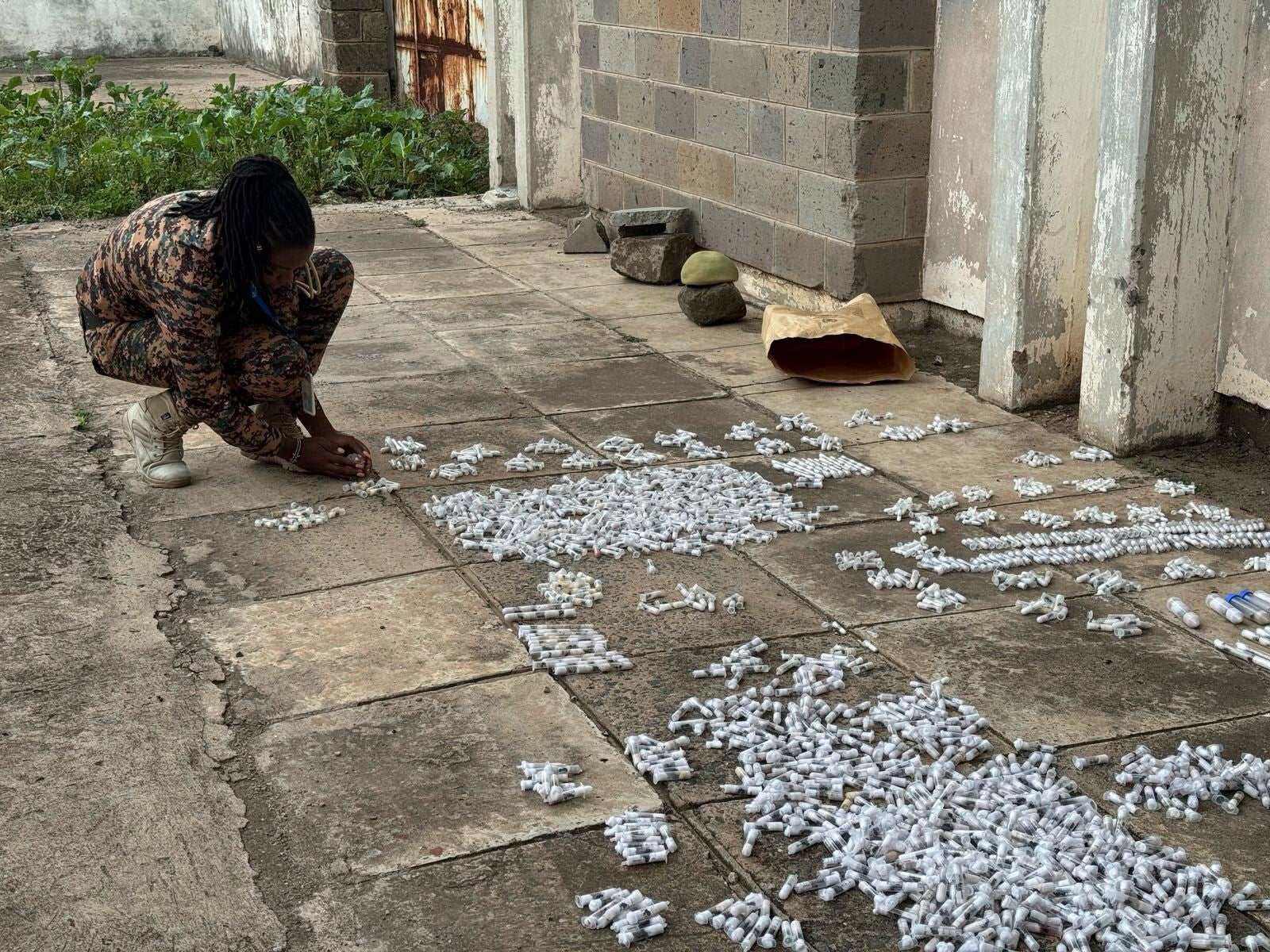
Samples of garden ants concealed in syringes were presented to court after four people pleaded guilty to illegal possession and trafficking of garden ants in Nairobi, Kenya
Reuters

Samples of garden ants concealed in syringes were presented to court after four people pleaded guilty to illegal possession and trafficking of garden ants in Nairobi, Kenya Reuters

546
SHARES
4.6k
VIEWS
Share on FacebookShare on Twitter

Four men were recently arrested and fined for attempting to smuggle more than 5,000 ants out of Kenya. Aiming to sell them as part of the exotic pet trade, these ants were being stored in individual test tubes and syringes with small amounts of cotton wool for transportation. This unusual case highlights an important yet overlooked aspect of wildlife trafficking.

Wildlife trafficking is a crime against nature which occurs mainly because of consumer demand. Trafficking refers to the illegal smuggling and continued exploitation of wild animals, plants or timber. That includes, as in this case, insects.

Much conservation effort, reporting, study and enforcement activity focuses on recognised species such as rhinos. Wildlife trafficking is often associated more with these charismatic species and products made from them such as elephant tusks and rhino horn.

But wildlife trafficking includes a whole spectrum of illicit animal trade from poaching and smuggling to the distribution of protected and endangered species. There is also thriving illegal trade in insects.

ReadAlso

Kenyan lawmakers accuse British troops of sexual abuse

Russia’s Economic Promises to Africa Prove Empty

For avid collectors, trophies and the exotic pet trade a wide array of insects have been seized over the years including rhino beetles into Japan, praying mantis eggs into the US and butterflies out of Sri Lanka.

Globally, insect species are declining. This is caused by an array of threats such as pollution, pesticides, climate change and urbanisation. Although the extent of the harm being caused by trafficking is unknown, this adds further pressure to species that already face extinction.

ADVERTISEMENT

Protections for insects vary. The conservation status of each ant species affects their level of protection both nationally and internationally.

Ants that are on the red list – which is the largest classification of endangered species produced by the International Union for the Conservation of Nature (IUCN) – and classed as critically endangered or endangered cannot be captured, killed or disturbed in any manner. An example is the anathema ant, which is currently listed as an endangered species.

International law puts controls on wildlife that may be threatened by trade. Some ants are protected under UK law which makes it an offence to disturb or destroy the nests of species like the red wood ant.

Belgian nationals Lornoy David, left, and Seppe Lodewijckx, right, walk out of the Jomo Kenyatta International Airport Law Courts in Nairobi, Kenya after appearing on ant trafficking charges
Belgian nationals Lornoy David, left, and Seppe Lodewijckx, right, walk out of the Jomo Kenyatta International Airport Law Courts in Nairobi, Kenya after appearing on ant trafficking charges (AP)

This case shows how wildlife trafficking extends to areas such as the smuggling of, and illegal trade, in ants. Some organised crime groups have moved from smuggling drugs and weapons to trafficking in plants, medicinal compounds and animals – including insects. Organised crime can include smaller and partially disorganised groups and networks. Where there is money to be made smuggling, networks will target wildlife.

The scale of the insect smuggling problem is unknown. Many cases will go unreported due to the clandestine nature of the trade. As such, both law enforcement and the wider public might not know or care about this being an offence.

Although there have been some insect trade seizures, law enforcement agencies are often underresourced and may view wildlife crimes as a low priority in comparison to other areas of criminality, such as drugs.

Often, insects are easily concealed. For example, 37 rhino beetles were discovered at Los Angeles International airport hidden within sweet and crisp packets.

Even once insects are seized, it can be difficult to identify the species to find out whether they are protected, given so many different levels of protections for species internationally.

Invasive species risk

Insect trafficking could introduce non-native species to new places.
Kenyan officials display live queen ants that were destined for Europe and Asia, at the Jomo Kenyatta International Airport Law Courts
Kenyan officials display live queen ants that were destined for Europe and Asia, at the Jomo Kenyatta International Airport Law Courts (AP)

If they establish a breeding population and pose a threat to local ecosystems, they can become known as “invasive species”. Invasive species can outcompete native species for food. Some destroy habitats. Others have the potential to bring new diseases to a country.

Not only can invasive insects pose threats to the environment such as the ongoing issue of invasive Asian hornets within Europe, but also affect people.

Hawaii spends US$10 million (£7.5 million) on invasive species control measures – US$2.4 million of that is set aside just for coconut rhinoceros beetles.

Although predicting which species and when they may become invasive is a challenge, insect trafficking can cause serious consequences.

Undervaluing some species protections provides avenues for traffickers, so enforcing trafficking laws for all wildlife, including insects, is crucial.

  • Elliot Doornbos is a Senior Lecturer of Criminology at Nottingham Trent University
  • Angus Nurse is a Professor of Law and Environmental Justice at Anglia Ruskin University

This article was originally published by The Conversation and is republished under a Creative Commons licence. Read the original article

Tags: Climate ChangeInsectsKenyaPoachingWildlife Trafficking
ADVERTISEMENT
Previous Post

White South Africans going to US are cowards, Ramaphosa says

Next Post

If illegal logging starts again, Liberia could lose more than its beloved pygmy hippos | Ellen Johnson Sirleaf

You MayAlso Like

Special Report

Man Exposes Fake Igwe-Elect’s Sinister Alliance with Enugu SWAT That Nearly Cost Him His Life

December 6, 2025
Special Report

Agony deepens as over 250 kidnapped schoolchildren remain lost in the wild

December 5, 2025
Special Report

Rejoinder: Addressing Misleading Allegations Against Enugu Commissioner for Science and Technology, Dr. Prince Lawrence Ozoemena Ezeh

December 6, 2025
Special Report

How a helicopter, vehicles and motorcycles were used to kidnap schoolchildren in Nigeria

November 30, 2025
Special Report

Lured by Jobs, They Ended Up ‘Going to War’ for Russia

November 30, 2025
Special Report

South Africa’s President Ramaphosa Not Invited to G20 Summit in U.S. in 2026, Says Trump

November 28, 2025
Next Post
Ellen Johnson Sirleaf, the former president of Liberia and first elected female head of state in Africa, stands for a portrait on World Malaria Day in Washington, D.C. Sirleaf, now a leader for global health issues, jokes that this is an "Angela Merkel" pose.
Shuran Huang/For NPR

If illegal logging starts again, Liberia could lose more than its beloved pygmy hippos | Ellen Johnson Sirleaf

Microsoft shuts down Skype

Discussion about this post

Stage-Managed Protest Backfires in Mburubu as Women Confront Self-Acclaimed Igwe-Elect Over ₦1,000 Instead of ₦5,000

US Spy Plane Flies Into Nigeria, Begins Surveillance Operations

Enugu Commissioner Donates Fleet of Buses and ₦50m to APC

Global Igbo Organizations Rally for Ancestral Reconnection at CISA-Fest 2025 in Abagana

Rejoinder: Addressing Misleading Allegations Against Enugu Commissioner for Science and Technology, Dr. Prince Lawrence Ozoemena Ezeh

How a helicopter, vehicles and motorcycles were used to kidnap schoolchildren in Nigeria

  • British government apologizes to Peter Obi, as hired impostors, master manipulators on rampage abroad

    1245 shares
    Share 498 Tweet 311
  • Maids trafficked and sold to wealthy Saudis on black market

    1069 shares
    Share 428 Tweet 267
  • Flight Attendant Sees Late Husband On Plane

    978 shares
    Share 391 Tweet 245
  • ‘Céline Dion Dead 2023’: Singer killed By Internet Death Hoax

    906 shares
    Share 362 Tweet 226
  • Crisis echoes, fears grow in Amechi Awkunanaw in Enugu State

    739 shares
    Share 296 Tweet 185
  • Trending
  • Comments
  • Latest

British government apologizes to Peter Obi, as hired impostors, master manipulators on rampage abroad

April 13, 2023

Maids trafficked and sold to wealthy Saudis on black market

December 27, 2022
Flight Attendant Sees Late Husband On Plane

Flight Attendant Sees Late Husband On Plane

September 22, 2023
‘Céline Dion Dead 2023’: Singer killed By Internet Death Hoax

‘Céline Dion Dead 2023’: Singer killed By Internet Death Hoax

March 21, 2023
Chief Mrs Ebelechukwu, wife of Willie Obiano, former governor of Anambra state

NIGERIA: No, wife of Biafran warlord, Bianca Ojukwu lied – Ebele Obiano:

0

SOUTH AFRICA: TO LEAVE OR NOT TO LEAVE?

0
kelechi iheanacho

TOP SCORER: IHEANACHA

0
Goodluck Ebele Jonathan

WHAT CAN’TBE TAKEN AWAY FROM JONATHAN

0

Man Exposes Fake Igwe-Elect’s Sinister Alliance with Enugu SWAT That Nearly Cost Him His Life

December 6, 2025

Agony deepens as over 250 kidnapped schoolchildren remain lost in the wild

December 5, 2025

Stage-Managed Protest Backfires in Mburubu as Women Confront Self-Acclaimed Igwe-Elect Over ₦1,000 Instead of ₦5,000

December 5, 2025

EFCC Arraigns Magistrate for Alleged Bribery

December 5, 2025

ABOUT US

Time Africa Magazine

TIMEAFRICA MAGAZINE is an African Magazine with a culture of excellence; a magazine without peer. Nearly a third of its readers hold advanced degrees and include novelists, … READ MORE >>

SECTIONS

  • Aviation
  • Column
  • Crime
  • Europe
  • Featured
  • Gallery
  • Health
  • Interviews
  • Israel-Hamas
  • Lifestyle
  • Magazine
  • Middle-East
  • News
  • Politics
  • Press Release
  • Russia-Ukraine
  • Science
  • Special Report
  • Sports
  • TV/Radio
  • UAE
  • UK
  • US
  • World News

Useful Links

  • AllAfrica
  • Channel Africa
  • El Khabar
  • The Guardian
  • Cairo Live
  • Le Republicain
  • Magazine: 9771144975608
  • Subscribe to TIMEAFRICA MAGAZINE biweekly news magazine

    Enjoy handpicked stories from around African continent,
    delivered anywhere in the world

    Subscribe

    • About TimeAfrica Magazine
    • Privacy Policy
    • Contact Us
    • WHO’SWHO AWARDS

    © 2025 TimeAfrica Magazine - All Right Reserved. TimeAfrica Magazine Ltd is published by Times Associates, registered Nigeria. Use of this site constitutes acceptance of our Terms of Service.

    No Result
    View All Result
    • WHO’SWHO AWARDS
    • Politics
    • Column
    • Interviews
    • Gallery
    • Lifestyle
    • Special Report
    • Sports
    • TV/Radio
    • Aviation
    • Health
    • Science
    • World News

    © 2025 TimeAfrica Magazine - All Right Reserved. TimeAfrica Magazine Ltd is published by Times Associates, registered Nigeria. Use of this site constitutes acceptance of our Terms of Service.

    This website uses cookies. By continuing to use this website you are giving consent to cookies being used. Visit our Privacy and Cookie Policy.